Nolan’s cyclops has a grisly Goya connection
Christopher Nolan has confirmed that Polyphemus in The Odyssey draws on Goya’s blood-soaked Saturn Devouring His Son.
By Georgia Hale · Staff Writer
3 min read
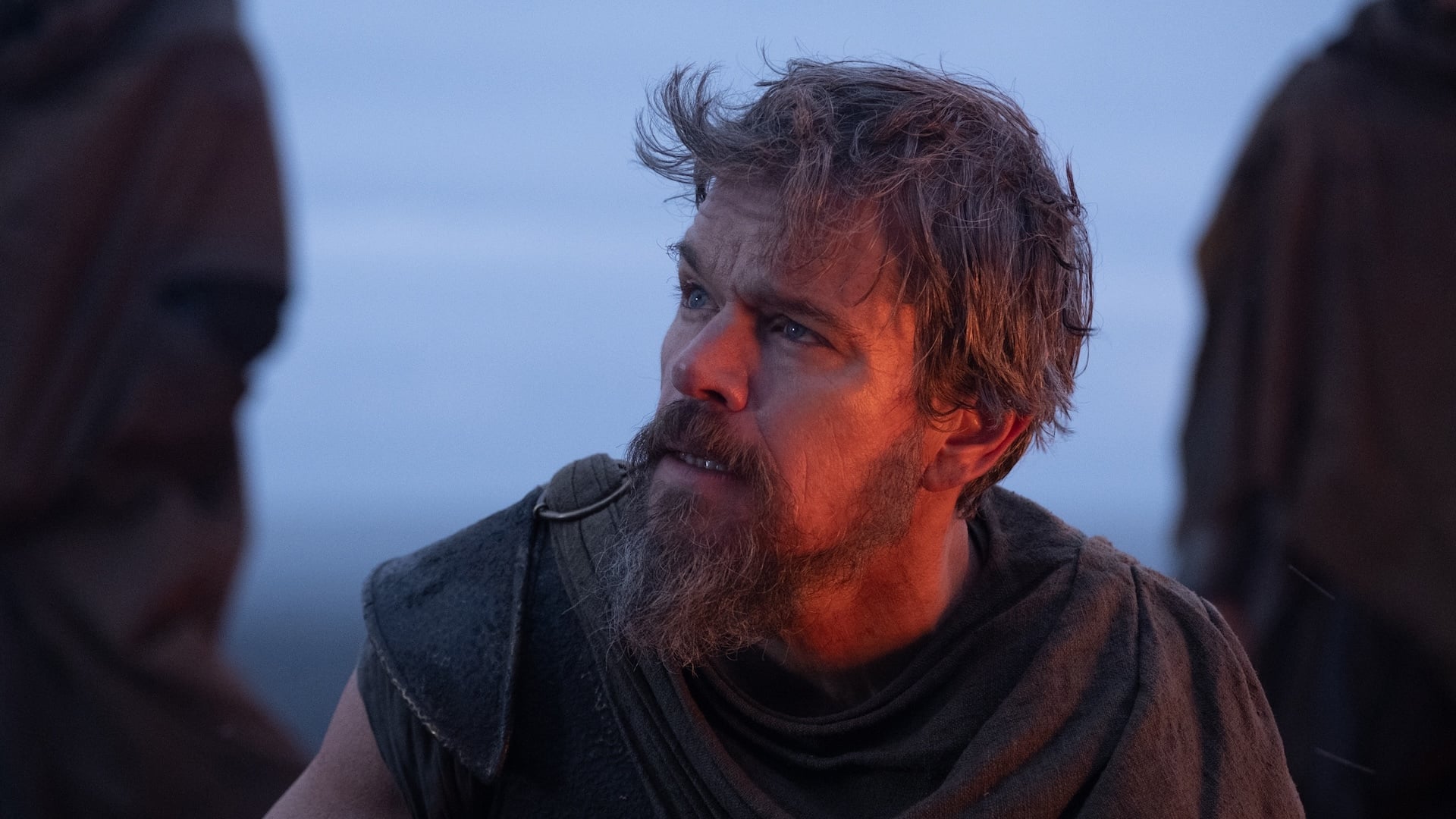
Christopher Nolan’s The Odyssey puts one of Homer’s nastiest monster meals on screen with help from a painting that has been haunting art lovers since the early 1820s.
According to the Associated Press, Nolan confirmed that the film’s cyclops, Polyphemus, was inspired by Francisco Goya’s Saturn Devouring His Son, the Spanish artist’s nightmare vision of a god eating his child.
In Nolan’s film, Odysseus, played by Matt Damon, is returning from the Trojan War with his men when they stop on an island for food and supplies. There, they enter the cave of Polyphemus, played by Bill Irwin, a towering one-eyed figure who keeps sheep and makes cheese before turning on the Greek soldiers.
Mashable’s description of the scene says the cyclops has a distorted, human-like body and a single rotated eye. In one major moment, Polyphemus grabs Odysseus’ men and eats them, holding a bleeding, headless body in his hand.
That image lines up with Goya’s Saturn Devouring His Son, which shows Saturn, the Roman name for the Greek Titan Cronus, tearing into a body. The work is held by the Museo del Prado, which identifies it as Goya’s painting of Saturn.
The myth behind the painting
Barry B. Powell’s Classical Myth recounts the story behind the image: Cronus, called Saturn by the Romans, led the Titans and fathered the Olympian gods. His parents, Gaia and Ouranos, were tied to a prophecy that one of his divine children would overthrow him.
Those children included Poseidon, Demeter, Hestia, Hera and Hades, according to Powell’s account. Cronus responded by swallowing them. Zeus, born in secret, later made his father bring them back up, and the Olympians rose against the Titans.
Goya’s painting changes the stomach-churning mechanics. Instead of showing Cronus swallowing his children whole, the painting presents Saturn with a mutilated body, head and arms gone, as he bites into the torso.
Nolan’s Polyphemus also has a divine bloodline. In Greek myth, he is the son of Poseidon and Thoosa, described as an Oceanid or sea nymph.
Homer was already brutal
The ancient poem did not need much softening to become horror. In Emily Wilson’s translation of Homer’s Odyssey, the cyclops seizes two men, smashes them on the ground and eats them “like a lion on the mountains,” consuming “flesh, entrails, and marrow bones.”
Goya was not the only major artist to tackle the Saturn myth. Flemish painter Peter Paul Rubens made his own version of Saturn Devouring His Son in the 17th century, another graphic treatment of the same act of mythic violence.
The Odyssey is set to hit theaters July 17.
This story draws on original reporting from Mashable.