Sam Reid says Lestat’s long table reckoning is all guilt and fangs
The Vampire Lestat star explains the finale’s Failure Finders, the missing Claudia and what the long table means for AMC’s Brat Prince.
By Georgia Hale · Staff Writer
3 min read
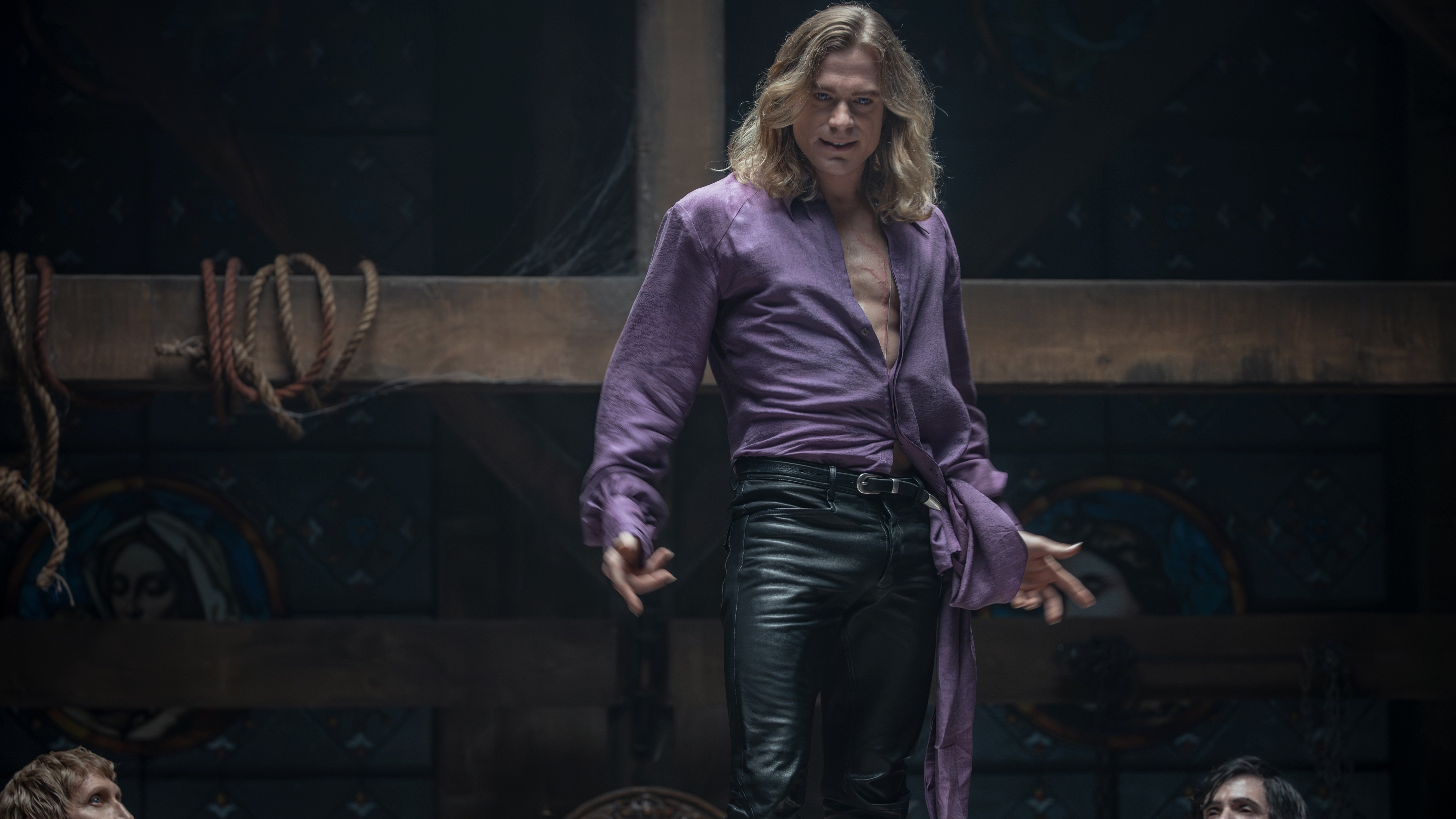
Lestat finally reaches the long table in The Vampire Lestat finale, and Sam Reid says the eerie gathering is less a neat answer than a psychic pile-on for AMC’s most theatrical vampire.
In episode 7, titled “The Failures,” Lestat is made to confront his past while Louis de Pointe du Lac, played by Jacob Anderson, is shown decapitated and being tortured by Armand, played by Assad Zaman. The sequence also pays off the long table image that had been teased throughout the season’s opening credits.
Reid discussed the finale with Mashable Entertainment Editor Kristy Puchko after an earlier studio interview about the season, including Claudia, Magnus and other major pieces of Lestat’s story.
Who sits at Lestat’s long table?
The table is led by Magnus, Lestat’s maker, played by Damien Atkins. Around him are several major figures from Lestat’s life: Nicolas “Nicki” de Lenfent, played by Joseph Potter; Louis; Gabriella, played by Jennifer Ehle; Antoinette, played by Maura Grace; and TC, played by Sarah Swire.
Claudia, played by Bailey Bass, is not among them.
Reid told Mashable that Lestat does not fully understand what the figures are, though he has been warned about them across the season. He pointed to Baby Jenks saying in episode 1 that “they’re coming for you,” and to Magnus telling Lestat in episode 3 that “at the long table, we eat your soul.”
According to Reid, Lestat knows the long table is coming, even if he does not know exactly what form the reckoning will take. The actor said Lestat, as a supernatural being, has “a lot of space to accept a lot of unknowns very quickly.”
Reid says the scene is about failure
Reid framed the season around Lestat’s struggle to admit failure. He told Mashable that Lestat is a character who tends to shrug off trauma rather than face it, even as the pressure of those experiences begins to crack him.
The season’s narration is built around recordings Lestat calls “The Failures.” Reid said Lestat is making them for a particular person, or possibly for whoever wins them at auction, and is trying to explain how events felt to him at the time.
That structure, Reid said, also helps explain the season’s jumpy shifts in time and tone, with Lestat raging, laughing, provoking and contradicting himself. He said some moments feel unfinished because Lestat himself was not fully examining them when they happened.
At the long table, Reid said, Lestat fights the “Failure Finders,” figures who represent people he loved or people who shaped him. Those figures keep telling him he has failed.
Reid left their exact nature open. He said the season establishes that the soul exists in the show’s world, so the figures could be read in more than one way. Still, he suggested the long table versions are heightened, pointing to the angry version of Louis seen there.
The actor told Mashable that the most accurate reading may be that they are forms of Lestat’s guilt and shame: how he believes the people he loved see him. He said the scene reflects what Lestat is fighting inside his own head every day, the fear that he has failed the people he most should have loved and helped.
Reid also connected that reckoning to the finale’s reveal of a damaged world, the future setting from which Lestat records his album, also called “The Failures.” He said Lestat comes to acknowledge responsibility for the world’s destruction, with the choices that follow left for later.
The Vampire Lestat is streaming on AMC and AMC+.
This story draws on original reporting from Mashable.