Christopher Nolan’s Odyssey cuts gods, sex and a brutal Homer finale
Variety says Nolan’s three-hour Homer adaptation reshapes Penelope, trims major episodes and gives Odysseus a very different homecoming.
By Georgia Hale · Staff Writer
3 min read
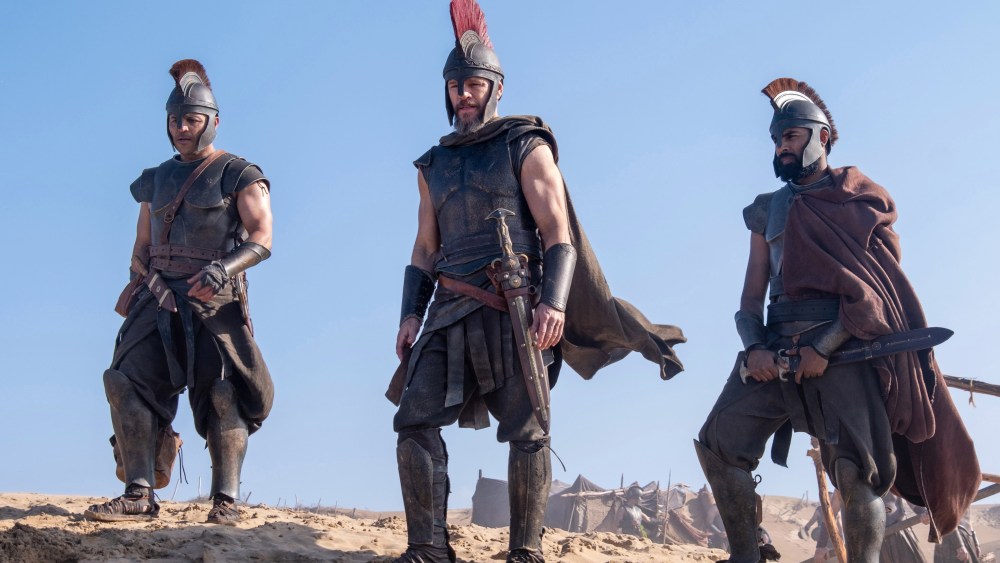
Christopher Nolan’s big-screen The Odyssey takes Homer’s sea-soaked epic and steers it into new waters, according to Variety’s Marlow Stern, with changes that touch the gods, the sex, the monsters and the final reckoning in Ithaca.
The film stars Matt Damon as Odysseus, portrayed by Variety as a war-scarred king trying to get home after Troy. Zendaya appears as Athena, Anne Hathaway plays Penelope, Tom Holland plays Telemachus and Robert Pattinson plays Antinous, the suitor leading the push for Penelope’s hand and Odysseus’ throne.
Variety notes the basic frame remains: Odysseus spends years trying to return to Ithaca while Penelope and Telemachus face the suitors at home. Nolan’s version, though, compresses and reshapes Homer’s long poem into a three-hour movie.
Penelope gets sharper, Telemachus gets checked
One of the biggest shifts, according to Variety, is the balance between Penelope and Telemachus. Homer’s Telemachus speaks down to his mother more than once, including a moment when he sends her back to her weaving. Nolan reverses that energy, with Penelope chastising her son for immaturity and taking a fiercer line against the suitors.
The movie also reworks Sinon, a figure associated with Virgil’s Aeneid rather than Homer’s Odyssey. Variety says Elliot Page plays Sinon as an Ithacan shepherd boy whose fate is tied to Odysseus, the Trojan Horse and Antinous’ wartime cowardice.
Some famous stops are gone
Variety reports that Nolan drops Odysseus’ stay with the Phaeacians on Scheria, where Homer has him meet Princess Nausicaa, King Alcinous and Queen Arete before being carried home by ship. The island of the lotus-eaters is also cut as a separate episode.
Instead, the movie gives the lotus to Calypso, played by Charlize Theron, who feeds it to Odysseus so he forgets his desire to return home, according to Variety.
The Laestrygonians also get a makeover. Homer’s man-eating giants smash most of Odysseus’ fleet with boulders. Variety says Nolan imagines them as armored, sword-carrying giants who use the forest to trap men in cages and destroy two of Odysseus’ three ships.
A cleaner Odysseus and fewer gods
Variety says the film removes Odysseus’ sexual encounters with Calypso and Circe, turning Damon’s hero into a faithful husband. In Homer, Odysseus spends years with Calypso and sleeps with Circe as part of securing his men’s release.
The gods are pared back, too. Athena, Hades, Calypso and Circe appear, according to Variety, while Zeus, Poseidon, Ino, Heracles and Hermes are absent. That means no Hermes rescue from Calypso and no magical herb to protect Odysseus from Circe’s spells.
The Cyclops escape also changes. Variety says Nolan drops the famous “Nobody” trick, the wine and the sheep disguise. Odysseus and his men instead flee after blinding Polyphemus by covering themselves with shrubbery.
The ending takes a different road
Homer’s final stretch, including Odysseus’ old-beggar disguise, his reunion with his father Laertes and Penelope’s test involving their immovable bed, is heavily altered or removed, according to Variety.
In Nolan’s version, Variety reports, Odysseus hides his battered face under a hood rather than being transformed by Athena. Laertes is omitted. The suitor fight is softened in some ways, with the enslaved women spared and some suitors yielding after Odysseus proves himself.
The movie ends with Penelope embracing a badly wounded Odysseus, Telemachus crowned king and Odysseus and Penelope sailing into exile, according to Variety. Homer’s poem closes with revenge-seeking families confronting Odysseus and his allies before Athena halts the violence.
This story draws on original reporting from Variety.