Daniel Wu returns to Hong Kong’s franchise fast lane
Daniel Wu told Variety his new roles in “Cold War 1994” and “Twilight of the Warriors” reconnect him with Hong Kong cinema’s past and future.
By Georgia Hale · Staff Writer
4 min read
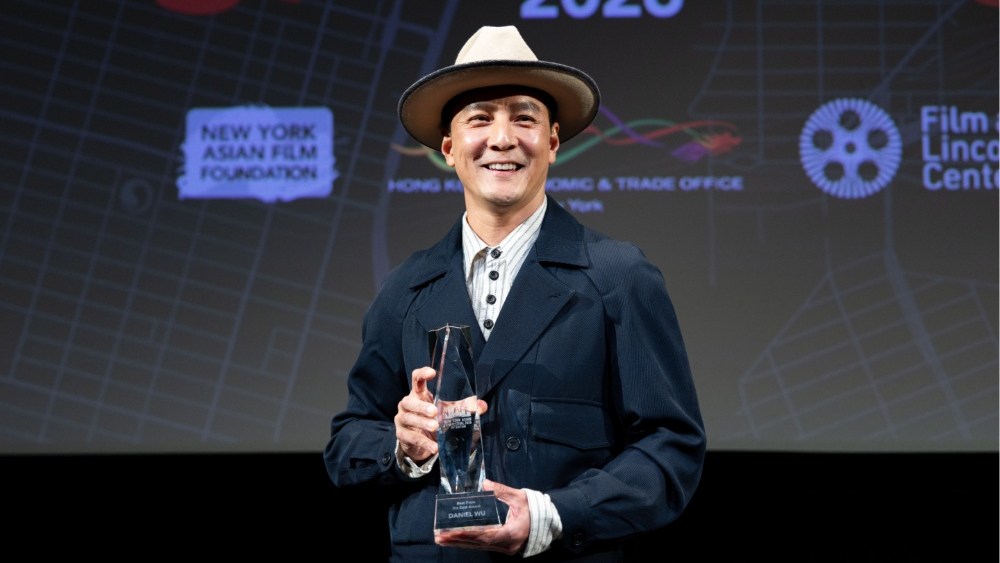
Daniel Wu is back in the thick of Hong Kong cinema, and the comeback comes with two franchise heavyweights on the slate.
The actor, who received the Best from the East Award at the New York Asian Film Festival, told Variety that recent work has placed him at the center of “Cold War 1994” and the continuing “Twilight of the Warriors” series.
“Cold War 1994” is the third film in the “Cold War” run and works as a prequel. Variety reports that Longman Leung wrote and directed the movie, with Bill Kong and Ivy Ho producing. The story is set before Hong Kong’s 1997 handover.
Wu plays Peter Choi opposite Terrance Lau as M.B. Lee. The character later appeared in “Cold War 2,” where Chang Kuo-chu played him as an outright villain, according to Variety.
The franchise has pedigree. Variety reports that the first two “Cold War” films, released in 2012 and 2016, were the top-grossing Hong Kong productions in their respective years.
A prequel with politics, police and old ghosts
Wu told Variety he did not make a planned exit from Hong Kong movies. He said the pandemic disrupted a pattern in which he had been doing one American project and one Asian project each year.
With “Cold War 1994,” Wu said the appeal was the caliber of the production, including its scale and screenplay. He also pointed to the chance to work with several generations of Hong Kong actors, including Lau, whom he described to Variety as part of the industry’s new wave.
The film’s story brings together a police case, the British colonial administration, Hong Kong law enforcement, a business family and the criminal world as the handover nears, according to Variety.
Wu, who was 22 when the handover took place, told Variety the film allowed him to better understand a tense and corrupt period he had lived through without fully grasping at the time.
He also said the role tested him because he had to play a younger version of a man audiences know becomes an “evil mastermind.” Wu described Peter Choi to Variety as the most morally ambiguous role he has played, because the character’s downfall comes through a chain of compromises.
Rice boxes, old crews and a hidden haircut
Coming back to a Hong Kong set after years away felt familiar fast. Wu told Variety that at a costume fitting he recognized almost everyone in the room, a contrast with American productions where he may know only one or two crew members.
He said eating char siu fan from a rice box on set with longtime colleagues brought a warm feeling, and he praised Hong Kong crews as “efficient, fast, and no bullshit.”
During press for “Cold War 1994,” Wu was often seen in a hat. Variety reports the hat was covering a new haircut for “Twilight of the Warriors: The Final Chapter,” the sequel to Soi Cheang’s “Twilight of the Warriors: Walled In.”
“Walled In,” adapted from Yu Yi’s novel “City of Darkness” and Andy Seto’s manhua of the same name, became Hong Kong’s second-biggest commercial hit ever and dominated the Hong Kong Film Awards, according to Variety. The earlier film was set in the 1980s, while the new entry moves to 1993, the year Kowloon Walled City was demolished.
Wu, who studied the Walled City’s architecture, told Variety the setting gives Hong Kong a rare chance to build a mainstream action franchise around a unique piece of local urban history.
He also pushed back on talk that Hong Kong cinema is dying, telling Variety the industry is closer to a renaissance despite producing fewer films than in the 1980s and 1990s.
Wu said his career has shifted from younger leading-man roles toward older, more paternal characters. He credited age and his U.S. work, including “Into the Badlands,” “Westworld,” “Tomb Raider” and “American Born Chinese,” for expanding that lane.
He was more critical of Hollywood’s current options for Asian American actors, telling Variety that opportunities have narrowed again, especially for Asian American men.
Wu is developing two scripts for the American market and one for mainland China, according to Variety, as he looks to take more control of his projects and possibly direct again after his 2007 debut “Heavenly Kings.”
After 25 years, he told Variety the work still has teeth: “The craft still challenges me.”
This story draws on original reporting from Variety.