Airlines favor higher fares as passenger traffic slows
U.S. airlines are accepting less-full planes as fares rise, betting premium demand and tighter capacity can protect revenue.
By Sal Moretti · Money Reporter
3 min read
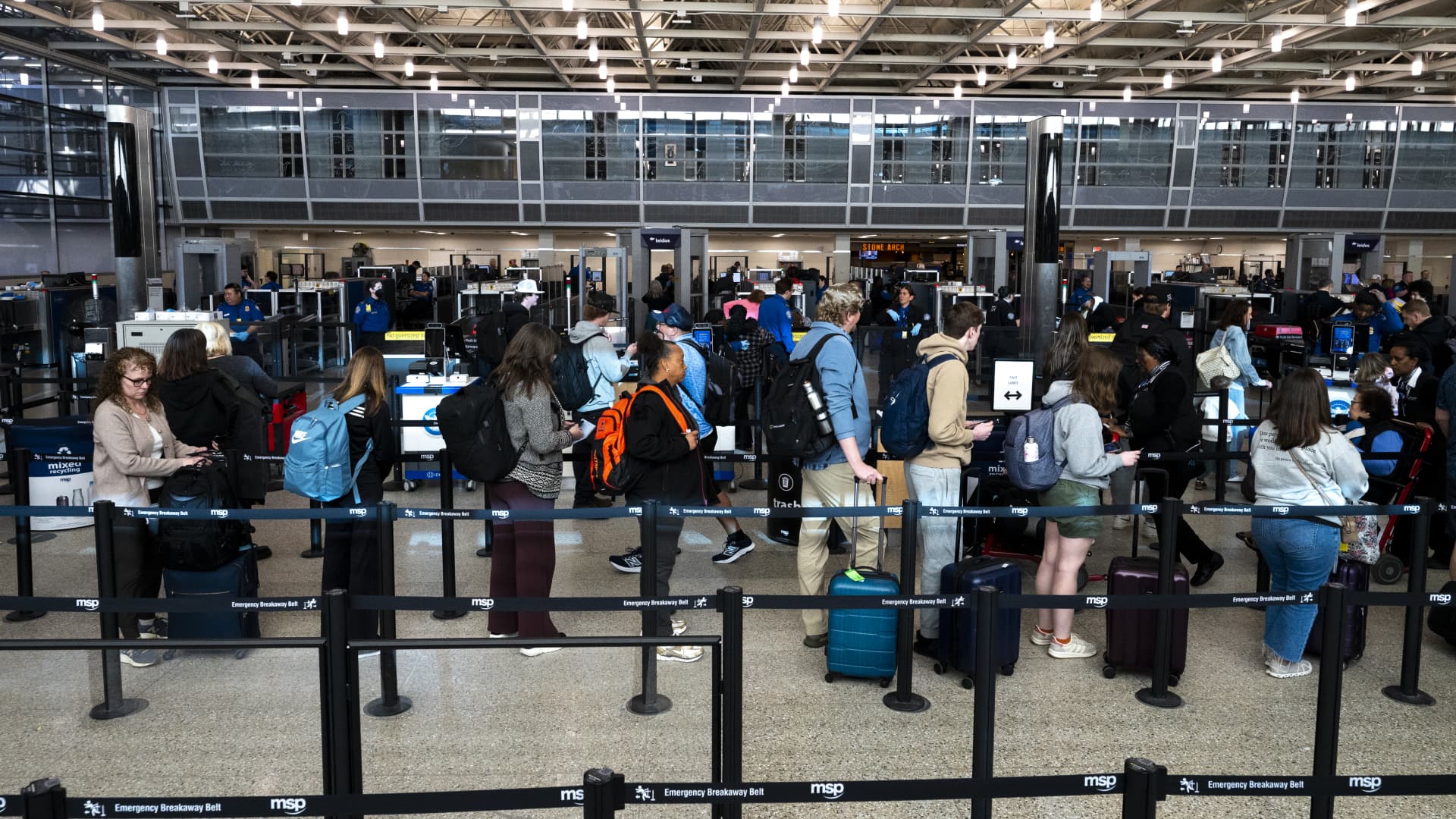
Airlines higher fares fewer passengers is the new calculation taking shape at major U.S. carriers. CNBC reported Oct. 23 that airport checkpoint traffic was on course for its first annual drop since 2020, while September airfares were more than 22% above a year earlier.
Carriers are not treating every empty seat as a crisis. Their stated focus is yield, the revenue collected per passenger, rather than load factor, which measures how full a plane is.
Why are airlines raising fares as fewer people fly?
The immediate pressure is jet fuel. CNBC reported that U.S. Gulf Coast spot jet-fuel prices had reached $4.63 a gallon, more than double their year-earlier level, citing the U.S. Energy Information Administration. Fuel is airlines' largest cost after labor, according to CNBC, and carriers have sought to pass more of that increase on to customers.
American Airlines Chief Commercial Officer Nat Pieper told an earnings call that the company was prioritizing yield over load factor. American's third-quarter load factor fell to 83.4%, from 86% in the same quarter of 2025, CNBC reported.
That approach can bring in more money from each traveler even when fewer people board. It does not mean carriers can ignore traffic. From April through Oct. 23, about 9.3 million fewer people passed through U.S. airport checkpoints than in the equivalent period a year earlier, a decline of less than 2%, CNBC reported.
Premium seats are part of the bet
Airlines told investors that demand remained strong for first class, business class and premium economy. Those tickets can cost hundreds or thousands of dollars more than coach, CNBC reported, giving carriers a higher-revenue customer mix even as broader traffic softens.
Southwest offers a clear snapshot. Its average third-quarter fare was $231.69, nearly $50 higher than a year earlier, while revenue passengers fell 3.2% to about 33.5 million, according to CNBC. The average fare did not include newer charges for checked bags or seats nearer the front of the aircraft.
Southwest said both its fares and passenger volumes topped its own forecasts. The slowdown is also uneven: United carried 2.4% more passengers in the third quarter than a year earlier and reported a 16% rise in unit revenue, CNBC said.
Higher prices do not erase the fuel bill
Executives' confidence is about pricing power, not a clean profit picture. CNBC reported that American, United, Delta and Southwest each cut their 2026 profit forecasts in October. American was the only one of the four expecting a full-year loss.
United expects to pay an average $4.80 a gallon for fuel in the fourth quarter, up from $3.90 in the third, CNBC reported. Some carriers have also reduced growth plans or warned that capacity expansion could slow. Fewer seats could help keep fares supported if demand holds, but that remains a conditional outcome rather than a certainty.
This story draws on original reporting from CNBC.