Supreme Court lets New Hampshire exclude student IDs in November vote
The emergency order lets New Hampshire reject student IDs even as supporting identity evidence for the Nov. 3 election while an appeal continues.
By Georgia Hale · Staff Writer
3 min read
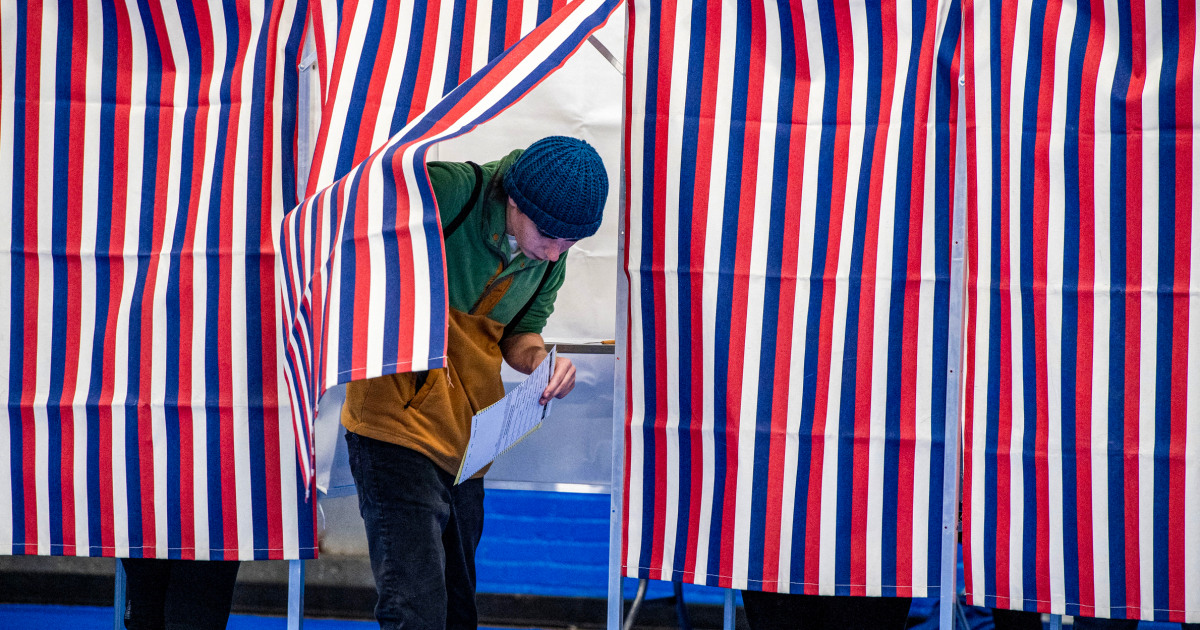
The Supreme Court has ruled that New Hampshire student IDs voting rules may exclude those cards as identity evidence in the Nov. 3 election. The unsigned emergency order allows state election officials, for now, to decline to consider a student ID even when a voter offers it alongside other material to establish identity.
The decision does not settle the legality of New Hampshire’s student-ID restriction. It pauses a lower federal court’s protection while the state’s appeal moves ahead, according to CNN and Democracy Docket.
Can New Hampshire voters use student IDs in November?
Not to verify their identity under the policy now in effect. New Hampshire’s spring law had already barred a student ID from serving by itself as qualifying voter identification, NBC News and CNN reported.
The legal fight centered on a separate route for voters unable to provide qualifying photo ID. That process permits voters to try to establish their identity with other evidence. The Coalition for Open Democracy argued that student IDs could be one item for officials to weigh with that other evidence; state officials took the position that they could not be considered at all.
The Supreme Court’s order lets Secretary of State David Scanlan’s broader interpretation operate for the November election. Scanlan, a Republican, sought the emergency intervention with support from the Republican National Committee, according to NBC News.
Why did the Supreme Court step in?
A federal district court on Oct. 2 blocked the state from applying its categorical ban in the alternative verification process. The court did not stop the underlying law, but said officials could not refuse to consider student IDs as other evidence of identity, Democracy Docket reported. The 1st U.S. Circuit Court of Appeals left that protection in place before the Supreme Court acted.
The justices said the district court had not given a sufficient reason to depart from the usual rule against federal courts changing election rules shortly before an election. The order invoked the Purcell principle, a judicial doctrine that cautions against late court actions affecting election procedures. The court did not disclose a vote count.
Justice Ketanji Brown Jackson dissented. She said the lower court had addressed New Hampshire’s interpretation of its law rather than changed the law itself, and said she would have left in place an order intended to give voters accurate information about the state’s election process.
The ruling arrived less than two weeks before Election Day. New Hampshire’s ballot includes an open U.S. Senate contest between Democrat Chris Pappas and Republican John Sununu for the seat held by retiring Democratic Sen. Jeanne Shaheen, according to NBC News.
For voters, the immediate takeaway is narrow but consequential: a student ID cannot stand alone as accepted identification, and under the Supreme Court’s temporary order it also cannot be used as supporting proof in the state’s alternative identity-verification process. The appeal remains unresolved.
This story draws on original reporting from NBC News.