The Assassin(s) opens SGIFF after South Korean calls to pull it
Director Hur Jin-ho thanked SGIFF for backing artistic freedom after the festival kept his disputed historical thriller as its opener.
By Bianca Rossi · Entertainment Editor
3 min read
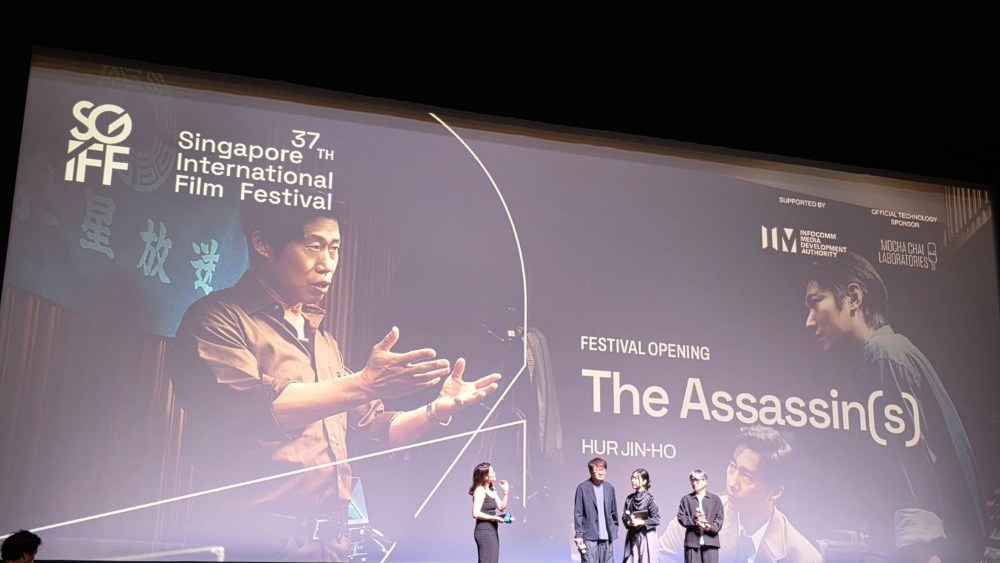
The Assassin(s) opened the 37th Singapore International Film Festival on Oct. 21, with director Hur Jin-ho thanking organizers for keeping the film in the lineup after South Korea’s conservative People Power Party called for it to be withdrawn. According to Variety, the The Assassin(s) SGIFF opening took place at Sands Theatre at Marina Bay Sands.
Hur told the audience that the festival’s decision to screen the film supported artistic freedom and freedom of expression in cinema. He said the decision gave encouragement to the people who made the movie, including its cast and crew.
Why did SGIFF keep The Assassin(s) as its opening film?
Festival chair Boo Junfeng said SGIFF had considered arguments over the film and regarded it as an artistic interpretation of historical events, Variety reported. He said the festival respected the filmmakers’ creative vision and stood by its opening-night selection.
Boo also said SGIFF has a no-cut policy, meaning it will not screen a film that has been censored. His stated position was that audiences should see films in the form intended by their makers.
The dispute began before the Singapore screening. On Oct. 6, all 109 lawmakers from South Korea’s People Power Party wrote to SGIFF executive director Jeremy Chua asking the festival to reverse its selection, according to Variety. The next day, SGIFF said it had chosen the film independently for its artistic merit and contribution to contemporary Asian cinema.
The PPP alleges the film distorts history. Its objection centers on the movie’s treatment of the Aug. 15, 1974 shooting at Seoul’s National Theater, when First Lady Yuk Young-soo was killed during an attempt on the life of her husband, then-President Park Chung-hee.
The thriller mixes historical material with fictional characters and situations, according to The Straits Times. It follows a police inspector, a newspaper editor and a young reporter as they examine inconsistencies in the official account of the shooting.
Critics of the film argue that its unresolved ending can be read as pointing to Park or his government. The filmmakers have disputed that interpretation. In a Sept. 28 statement reported by Variety, the producers said the film does not identify a particular person as responsible for the killing and does not present its speculative elements or dramatic settings as historical fact.
The controversy had already affected the film’s domestic festival run. Variety reported that distributor Hive Media Corp. withdrew cast and crew appearances at the Busan International Film Festival on safety grounds. Korean industry guilds also criticized pressure directed at people who worked on the production.
At the Singapore gala, Hur said the 1974 shooting had stayed with him since childhood and that differences between the official account and information that emerged later led him to build a pursuit thriller around the event, Variety reported.
This story draws on original reporting from Variety.