Oil squeeze tightens as Russia refining troubles pile onto Hormuz crisis
J.P. Morgan strategists say record-low visible oil inventories are leaving markets exposed as Hormuz disruption and Russian refining strain collide.
By Sal Moretti · Money Reporter
3 min read
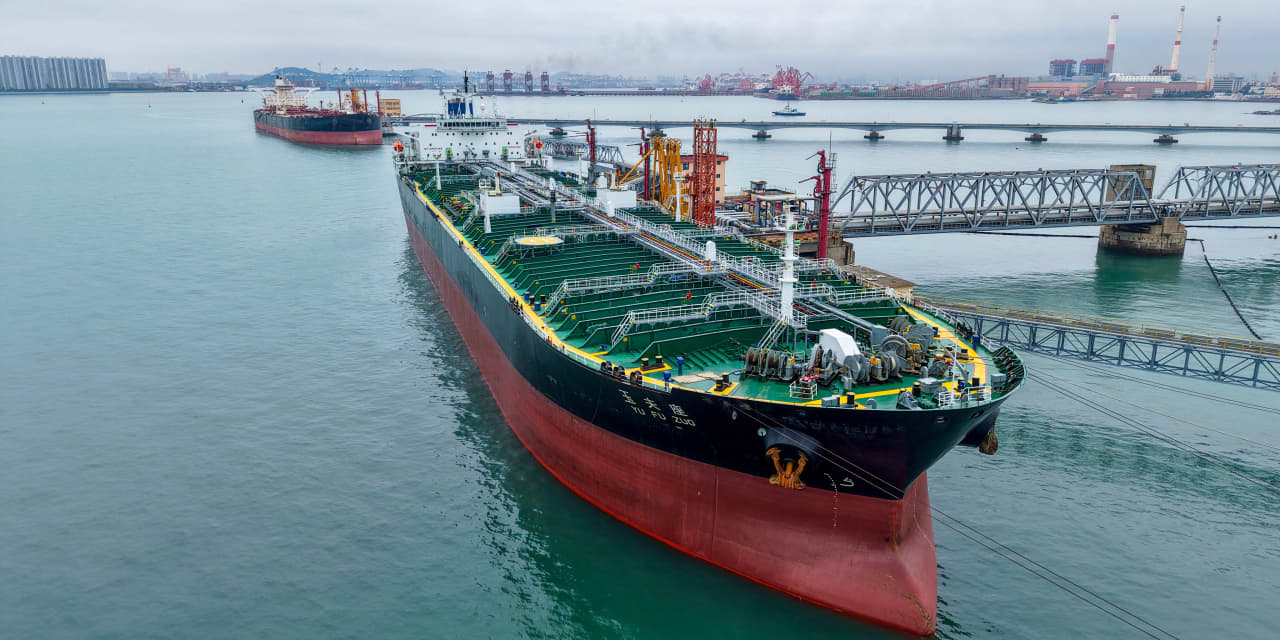
Oil markets are getting squeezed from two directions at once: a disrupted Strait of Hormuz and fresh strain inside Russia’s refining system, according to J.P. Morgan strategists led by Natasha Kaneva.
The team said in a Thursday note that global visible onshore oil inventories, excluding China, have dropped to record lows. That leaves the market with little cushion as supply problems stack up.
The Strait of Hormuz, a key route for oil shipments, has been hit by the conflict involving the U.S. and Iran. Traffic through the waterway began to recover in June after Washington and Tehran signed a memorandum of understanding extending an existing cease-fire by 60 days, according to the strategists.
That recovery did not hold. Shipping through the strait fell again after the two countries resumed attacks, pushing crude prices back toward levels last seen before the deal was signed, the J.P. Morgan team said.
Russia’s refinery squeeze adds another jolt
The Hormuz disruption is not the only headache. J.P. Morgan said Russia’s refining system has come under renewed pressure, with refinery runs sliding to 3.3 million barrels a day this week from 3.8 million barrels a day last week.
That current rate is 2 million barrels a day below the level from a year earlier, the strategists said.
The pain is showing up most clearly in diesel. Russian diesel exports are now close to zero, compared with an average of nearly 800,000 barrels a day in 2025, according to the note.
That shift matters because the stress is not confined to crude supply. J.P. Morgan said distillate cracks in both the U.S. and Europe have moved toward record highs, signaling that refining capacity and refined products are becoming a central pressure point for the market.
New sanctions threat hangs over supply
The strategists also pointed to a revised Russian sanctions bill unveiled Tuesday by U.S. senators. The proposal would place a 100% tariff on the five biggest buyers of Russian crude oil and natural gas, including China and India.
The bill also seeks to target Russia’s shadow fleet, energy projects and financial institutions, according to the strategists. The measure was drafted by Sen. Lindsey Graham, a Republican from South Carolina.
J.P. Morgan said the combined pressure from Hormuz, Russia’s refining troubles and thin inventories helps explain the market’s current signal: the shock is increasingly tied to refining, not just crude availability.
The bank still expects Washington and Tehran to seek talks rather than settle into a prolonged conflict. Even so, its strategists said the market debate has moved from whether the Strait of Hormuz will stay open to who controls the terms under which it operates.
For the third quarter, J.P. Morgan expects Brent crude to average about $86 a barrel and West Texas Intermediate to average about $81 a barrel.
This story draws on original reporting from MarketWatch.