UnitedHealth raises profit forecast as cost squeeze starts to ease
The insurer beat Wall Street estimates, lifted its 2026 earnings outlook and said AI is helping speed up some operations.
By Frankie Delgado · News Reporter
3 min read
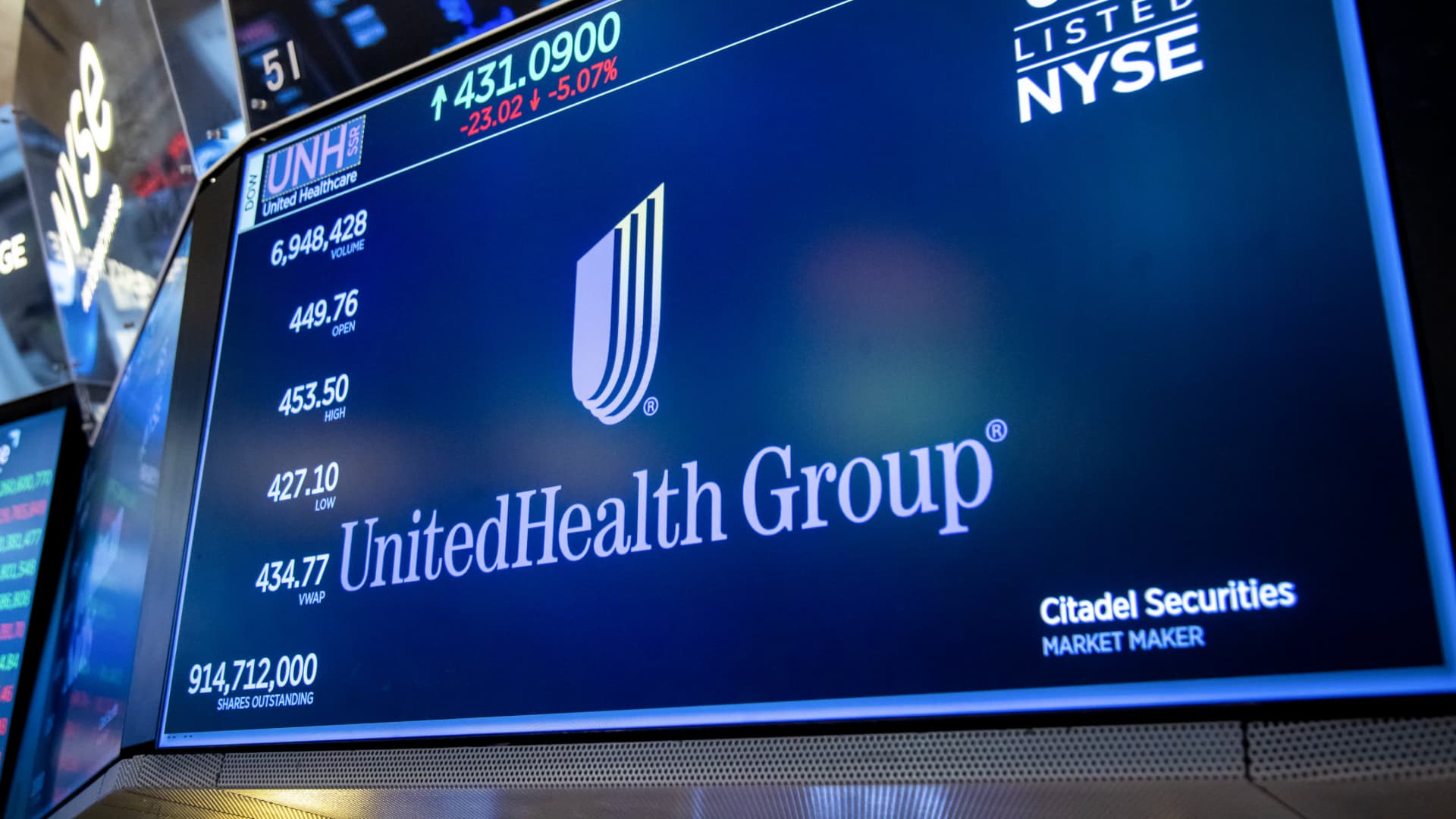
UnitedHealth Group delivered a stronger second quarter than Wall Street expected and raised its profit forecast, giving investors a sign that the insurer’s cost-control push is beginning to show up in earnings.
The company said Thursday it now expects adjusted 2026 earnings of $19.50 to $20 per share, up from its prior forecast of more than $18.25 per share. It kept its full-year revenue guidance at more than $439 billion.
Chief Financial Officer Wayne DeVeydt told CNBC he expects UnitedHealth to “do better than that” revenue target after the quarterly beat, while cautioning that medical costs are still above older norms.
UnitedHealth shares rose about 7% in premarket trading after the results.
The numbers beat forecasts
For the second quarter, UnitedHealth reported adjusted earnings of $6.38 per share on revenue of $112.03 billion. Analysts surveyed by LSEG had expected adjusted earnings of $4.90 per share and revenue of $110.85 billion.
Net income rose to $5.48 billion, or $6.04 per share, from $3.41 billion, or $3.74 per share, in the same quarter a year earlier.
The adjusted figure excluded items including business divestitures, restructuring and an expected reduction of reserves for unprofitable contracts, according to the company.
Revenue edged up from $111.62 billion a year ago. UnitedHealth’s insurance arm, UnitedHealthcare, and its Optum health-care unit both came in above sales expectations, according to StreetAccount.
Costs remain the big battle
DeVeydt told CNBC that medical expenses remained “elevated over historical levels,” a problem that has pressured the insurance industry for more than two years.
He said the quarter reflected work to push down an already high cost base rather than a broad reversal in medical-cost trends.
UnitedHealth’s medical benefit ratio, which compares medical expenses paid with premiums collected, was 86.7% in the second quarter. That improved from 89.4% a year earlier and beat the 88.5% expected by analysts, according to StreetAccount. A lower ratio typically points to stronger profitability.
The company is trying to steady margins by reducing membership, leaving unprofitable contracts and investing $1.5 billion in artificial intelligence to make operations more efficient.
DeVeydt said AI is being used to speed up prior authorizations and improve payment accuracy by spotting potential fraud, waste and abuse. He said AI tools are not deciding whether care is approved or denied.
Membership is shrinking
UnitedHealthcare served 48.5 million people in the second quarter, down 525,000 from the prior quarter.
The company said higher health-care costs are pushing insurers to raise premiums and adjust benefits, contributing to membership losses in Affordable Care Act exchange plans and privately run Medicare Advantage plans.
UnitedHealth said revenue has stayed stable because higher prices are offsetting lower enrollment. DeVeydt told CNBC that balance “is not a good thing for the system long term.”
He attributed the membership declines largely to affordability pressures tied to higher health-care costs. He forecast a loss of about 500,000 ACA exchange members and 1.1 million Medicare Advantage members in 2026.
Insurers that run Medicare Advantage plans have been under pressure from more patients seeking care they had delayed after the pandemic and from expensive specialty drugs, including GLP-1 medicines, according to CNBC.
The results come roughly a year after UnitedHealth disclosed Department of Justice investigations into its Medicare billing practices. DeVeydt said the company had no updates and remains supportive of the probe.
This story draws on original reporting from CNBC.