2026 PPR mock draft shows early training camp fantasy trends
CBS Sports ran a 12-team PPR mock, with Puka Nacua going No. 1 and Jamey Eisenberg weighing a risky RB-heavy build.
By Georgia Hale · Staff Writer
3 min read
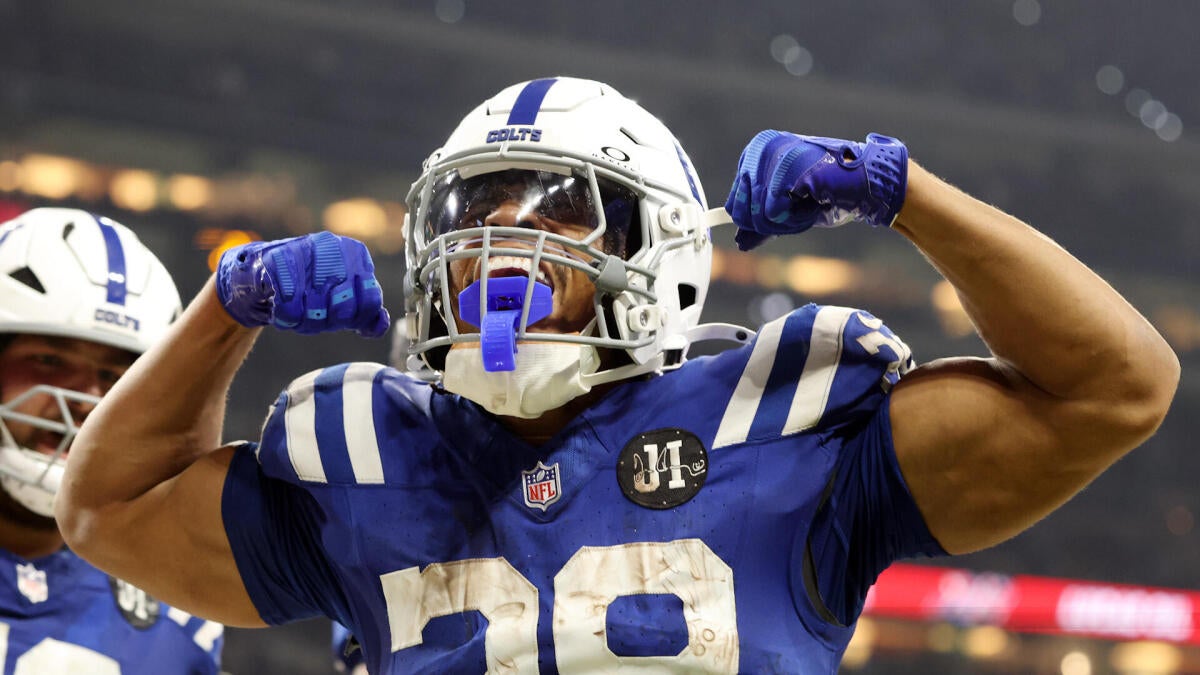
The latest 2026 PPR mock draft from CBS Sports put Puka Nacua on top, loaded the early rounds with running backs and wide receivers, and gave fantasy managers a fresh training-camp snapshot of how industry drafters are building teams.
CBS Sports senior fantasy writer Jamey Eisenberg reported that the 12-team exercise was held at the end of July with CBS staffers and two Fantasy Football Today Podcast listeners. Eisenberg drafted from the No. 7 slot and came away with a roster he called solid, though not quite the build he wanted.
The first round moved quickly through the biggest fantasy names. Jake Winderman opened with Nacua, Jake Grogins took Bijan Robinson at No. 2, R.J. White selected Jahmyr Gibbs at No. 3 and Meron Berkson drafted Ja'Marr Chase at No. 4.
Sam Davis took Amon-Ra St. Brown fifth, Erik Guenther followed with Jaxon Smith-Njigba, and Eisenberg landed Jonathan Taylor at No. 7. The rest of Round 1 went James Cook, Justin Jefferson, Christian McCaffrey, CeeDee Lamb and De'Von Achane.
What were the 2026 PPR mock draft rules?
In PPR fantasy football, managers get one point for every catch, which boosts the value of pass-catching running backs and high-volume receivers. CBS Sports said this mock used 12 teams, 14 rounds, six-point touchdowns, one point per 10 rushing or receiving yards, and one point per 25 passing yards.
The starting lineup was one quarterback, two running backs, three wide receivers, one tight end and one flex spot for a running back, wide receiver or tight end, with six bench spots.
Eisenberg started with Taylor in Round 1 and Kenneth Walker III in Round 2, leaning into a running back-heavy opening despite the three-receiver lineup. He then selected Emeka Egbuka in Round 3, writing that Egbuka is among his favorite breakout options because he should be Tampa Bay's No. 1 receiver.
The turning point came in Round 4. Eisenberg took Breece Hall at No. 42 overall, giving him Taylor, Walker and Hall, a trio he described as the best running back group in the league. The catch: he passed on Terry McLaurin, Luther Burden III and D.J. Moore, all receivers he later said could have strengthened his roster.
That receiver squeeze hit fast. By Eisenberg's Round 5 pick, McLaurin, Burden, Moore, Malik Nabers, Davante Adams and Mike Evans were gone. Rather than reach for Christian Watson or Rome Odunze, he selected Lamar Jackson at No. 55, making Jackson his quarterback anchor.
- First quarterback drafted: Josh Allen, taken by Will Brinson at No. 40.
- First tight end drafted: Brock Bowers, taken by Jake Winderman at No. 25.
- Eisenberg's first receiver: Emeka Egbuka at No. 31.
- Eisenberg's tight end: Travis Kelce in Round 9 at No. 103.
Eisenberg filled out his starting receiver spots with Alec Pierce in Round 6 and Quentin Johnston in Round 7, then waited until Round 9 for Kelce. His bench leaned heavily toward wideouts, with Jalen Coker, Denzel Boston, Antonio Williams and Jack Bech joining Rhamondre Stevenson and Emmett Johnson.
The lesson from Eisenberg's write-up was blunt for drafters heading into real leagues: tier breaks can bite. He wrote that missing the receiver pocket forced him to chase the position later, even after building a roster with strong running backs, an elite quarterback and upside at receiver.
This story draws on original reporting from CBS Sports.