2026 World Cup college campuses turned soccer visitors into cash
U.S. schools hosted World Cup teams, packed football stadiums and chased new revenue as soccer brought money, gear and global attention.
By Deshawn Carter · Sports Writer
3 min read
The 2026 World Cup college campuses story was not just about training fields and flags. According to ESPN, U.S. athletic departments used this summer’s tournament to bring in cash, upgrade facilities and put their brands in front of international audiences.
Thirteen universities hosted national team base camps, ESPN reported, while 12 more schools were considered among 62 FIFA-approved training sites. The campuses ranged from Rutgers, with 46,934 students, to Westmont College in California, with 1,293.
The model had an old echo. ESPN recalled that Babson College hosted Argentina before the 1994 World Cup, when coach Jon Anderson helped look after the team and Argentina’s federation improved the school’s field. Anderson told ESPN the visit made money for Babson and brought free facility upgrades.
Why did colleges host World Cup teams?
A World Cup base camp is where a national team trains and operates between matches, usually bringing staff, equipment and media attention with it. For colleges, ESPN reported, the payoff could include rental fees, better facilities, social media reach and proof they can stage major events beyond their own sports calendars.
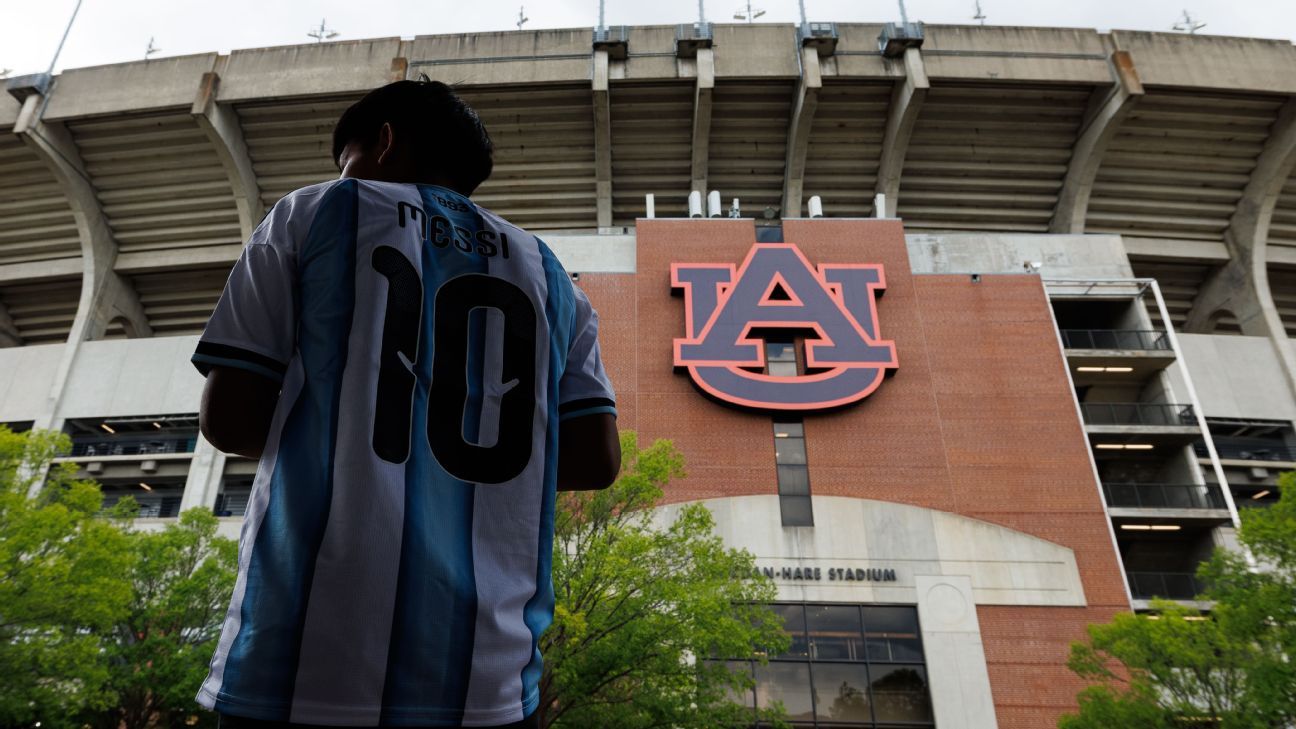
The biggest checks came from exhibition matches. Texas A&M drew 91,102 fans to Kyle Field for Argentina’s friendly on June 6, ESPN reported. Three days later, Auburn hosted 88,043 at Jordan-Hare Stadium as Lionel Messi scored in Argentina’s 3-0 win over Iceland.
Neither Texas A&M nor Auburn publicly released final financial totals, according to ESPN, but officials at both schools projected net revenue of at least $1.5 million to $1.8 million. ESPN, citing Auburn athletic department sources, reported the school’s final net revenue could top $2 million from tickets, merchandise, concessions and other income.
Contracts obtained by ESPN through public records showed Auburn worked through Unified Events and agreed to a 60-40 split of net revenues. The school paid Argentina a $2.4 million guarantee, with more possible through ticket bonuses, while Iceland received $325,000.
The numbers were smaller for training camps, but still useful. ESPN reported that an unredacted UNC Greensboro contract showed the school received $307,582 for Norway’s 22-day stay, or $13,981 per day. Other campus athletic department sources told ESPN their agreements were in similar ranges.
Some schools also got a gear haul. ESPN reported that Portland, the University of San Diego and Wake Forest received items such as cones, pinnies, goals, training dummies, custom benches and fencing from visiting teams.
Kansas found a different kind of prize with Algeria. ESPN reported that fans lined Interstate 70 when the team arrived in Lawrence, and Kansas officials later saw clips spread widely, including Algeria star Riyad Mahrez shooting basketballs inside Allen Fieldhouse. Kansas chief revenue officer Jason Booker told ESPN the visit became the school’s highest-viewed athletics social media post of the year.
The local embrace traveled all the way to Arrowhead Stadium, where Algeria fans held a banner during a 3-3 draw with Austria that read, “Thank you Lawrence,” according to ESPN.
Administrators told ESPN they see more to chase after the tournament. San Diego deputy athletic director Jessica Goerke said the school expects to pursue base camps for the 2028 Olympics and the 2031 Women’s World Cup. Kansas officials are also weighing new uses for Rock Chalk Park, from naming rights to youth tournaments and overseas attention.
This story draws on original reporting from ESPN.com.