Curtis Mead trade to Red Sox gets painful fantasy twist
Curtis Mead moved to Boston for Connelly Early, then fractured his wrist in his second Red Sox plate appearance, CBS Sports reported.
By Deshawn Carter · Sports Writer
3 min read
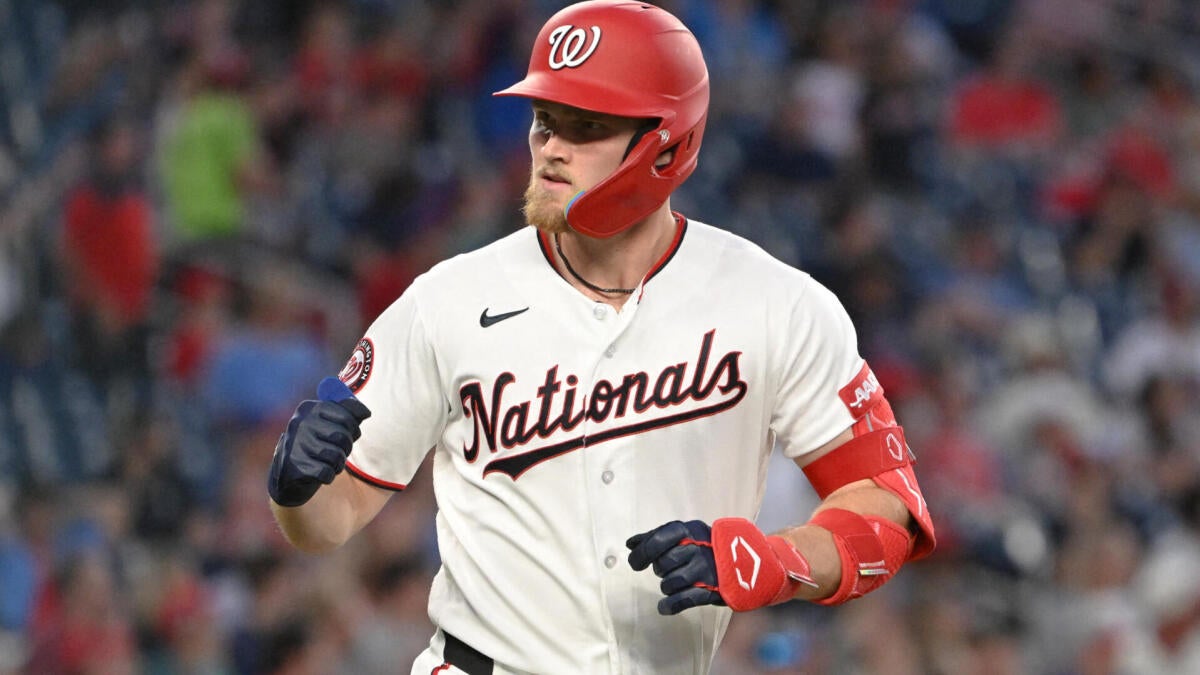
The Curtis Mead trade had a tidy fantasy baseball case: a right-handed bat moving to Fenway Park, a cleaner everyday role with the Red Sox and a possible position boost. Then the story took a painful turn.
CBS Sports reported that Mead, acquired by Boston from the Washington Nationals for pitcher Connelly Early, fractured his wrist in his second plate appearance for the Red Sox and is likely to miss the rest of the season.
Before that update, CBS Sports fantasy analyst Scott White had framed Mead as the main fantasy winner in the deal. White wrote that Mead had broken out offensively but had been sitting at times because of Washington’s infield depth, while Boston could give him regular at-bats at second base.
The deadline deal came as MLB’s trade window headed toward 6 p.m. ET on Monday, Aug. 3. CBS Sports described the swap as unusual for the deadline: a needs-based move between two clubs near the edges of contention, rather than a salary dump or prospect sale.
What does the Curtis Mead trade mean for fantasy baseball?
For 2026, the fantasy meaning changed fast because of the wrist fracture. CBS Sports said the positive Red Sox outlook for Mead is now theoretical and may apply more to 2027, depending on what Boston does before then.
Before the injury, White viewed Mead’s move to Boston as a path toward everyday playing time and continued multi-position value. He noted that playing second base could help Mead keep eligibility at multiple spots next year, with third base still the place where he carried the most fantasy usefulness.
Mead’s 2026 line at the time of the report showed why fantasy managers were interested: a .254 average, 17 home runs, six steals, a .352 on-base percentage and an .852 OPS across 284 at-bats.
White also pointed to Fenway Park as a strong fit for Mead’s swing. His analysis said Mead does not rely on top-end exit velocity, but hits plenty of pulled fly balls from the right side, a profile that could turn some outs into hits off the Green Monster.
Why did the Nationals get Connelly Early?
Washington’s side of the trade centered on Early, a 24-year-old starting pitcher. CBS Sports listed his 2026 numbers at 7-5 with a 3.44 ERA, a 1.26 WHIP, 93 strikeouts and 34 walks over 91.2 innings.
White wrote that, from a real-world roster view, the Nationals may look like they landed the more valuable piece because Early entered the season as a top prospect. He also noted that Mead had already fallen short with two organizations and has defensive questions.
The pitcher does not arrive without risk. CBS Sports said Early was sidelined by elbow inflammation at the time of the trade. White wrote that the injury did not sound serious, but it added uncertainty to the deal.
Even before the elbow issue, White said Early’s control had been shaky and his stuff had not played as well as expected, with ERA estimators sitting above his actual ERA. His read: Boston may have decided this was the right time to move him.
For fantasy players, the swap now splits into two calendars. Mead’s 2026 value appears derailed by injury, while Early gives Washington a controllable starter with upside and some warning lights attached.
This story draws on original reporting from CBS Sports.