Eight leagues team up to sharpen women’s college basketball officiating
The ACC, Big East and six other Division I conferences have launched a joint officiating alliance led by Pualani Spurlock-Welsh.
By Georgia Hale · Staff Writer
3 min read
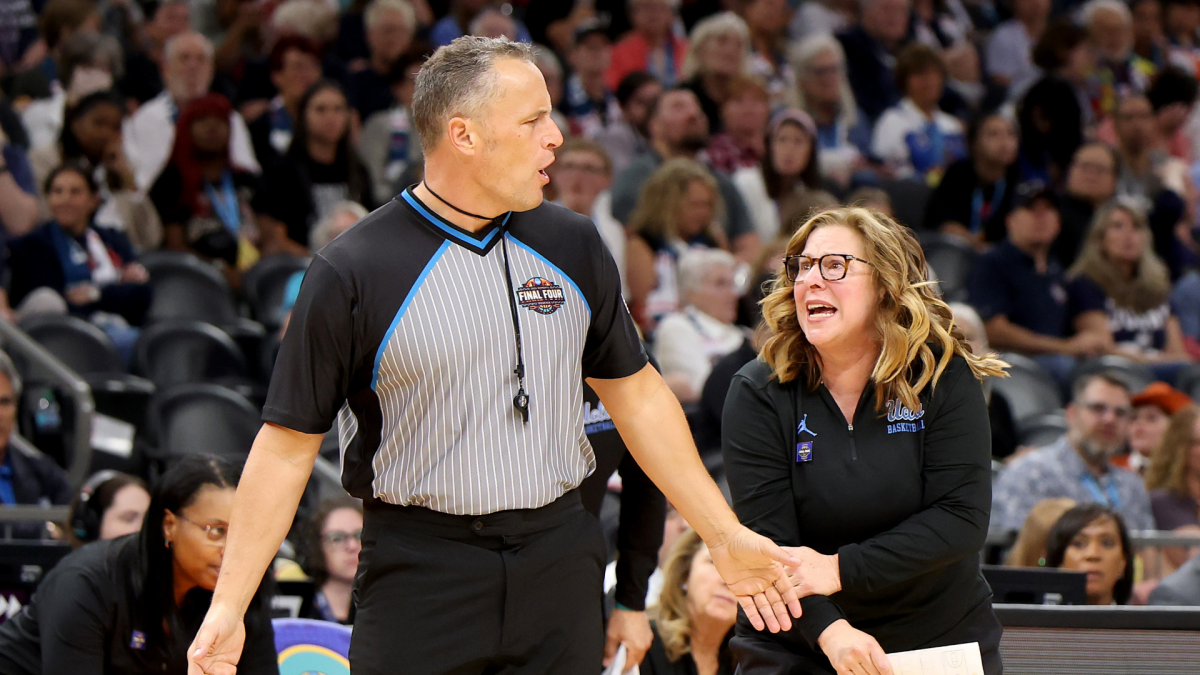
Eight Division I conferences are pooling their whistles in a new women’s college basketball officiating alliance, with a stated goal of improving the quality, consistency and development of referees across their leagues.
The conferences announced the partnership Monday. The group includes the ACC, American Conference, Big East, Atlantic 10, Big South Conference, Coastal Athletic Association, Ivy League and Metro Conference, which was formerly the Metro Atlantic Athletic Conference.
Pualani Spurlock-Welsh will lead the alliance. According to the announcement reported by CBS Sports, she has worked as a full-time official for multiple conferences since 2011 and was named supervisor of officials for the ACC, Big East and American Conference last month.
ACC Commissioner Jim Phillips described the move to USA Today as a direct investment in women’s basketball and the people calling its games.
“You have to continue to groom young officials and new officials to the game in different ways,” Phillips told USA Today. “And one way to do it is through the conferences. I’m excited about it. It’s a strategic, dedicated group looking to make sure that they’re delivering the very best quality of a women’s basketball officiating.”
What the alliance will handle
The conferences said the plan is built around a shared system for assigning, training, evaluating and overseeing officials. The aim is to make the process more connected across leagues instead of leaving each conference to work in its own lane.
According to the announced list of services, the alliance will:
- Identify, recruit and retain officials.
- Improve training, education, mentorship, evaluation and feedback.
- Create collaborative assigning strategies that use geography more efficiently across the member leagues.
- Hold seasonal game-management calls and provide updates tied to alliance operations.
A key piece is a clearer ladder for referees. Less experienced officials can begin in smaller conferences, then move into larger assignments after more training and development, according to the plan described by Phillips to USA Today.
“You need a system that’s got some tiers to it, so that you have a chance to move up as you get experience and become more familiar with women’s basketball,” Phillips told USA Today. “It’s a training mechanism for women’s college basketball overall. The commissioners will obviously have some oversight to it.”
A formal version of an existing partnership
The idea is not coming out of thin air. CBS Sports reported that the same eight conferences had already been working together under Debbie Williamson, who had served as a conference coordinator of officials since 2014 before retiring earlier this year.
Williamson directly oversaw all eight leagues, according to CBS Sports. Under the new setup, Spurlock-Welsh will remain supervisor for the ACC, Big East and American Conference, while representatives for the other five leagues will report to her.
Why the timing stands out
Officiating has stayed in the spotlight across women’s basketball. In April, UConn coach Geno Auriemma criticized the lack of calls during the 2026 national championship game against South Carolina, saying his players had been taking heavy contact during the game. He also said he was not using that as an excuse for UConn’s shooting.
The issue predates that game. In 2023, the NCAA acknowledged that officiating in the LSU-Iowa national championship game “did not meet expectations,” saying the rate of correct calls was below its usual mark, according to CBS Sports.
The WNBA has faced similar scrutiny. Ahead of the 2026 season, commissioner Cathy Engelbert announced a specialized task force focused on officiating consistency and physicality. Minnesota Lynx coach Cheryl Reeve, who joined that task force, told the Associated Press that the league had made progress on issues involving unnecessary physical play.
This story draws on original reporting from CBS Sports.