Eye tracking sports tech is training refs, goalies and brains
NBA referees and pro athletes are using VR eye drills to sharpen reactions, while companies test similar tools for brain health.
By Georgia Hale · Staff Writer
4 min read
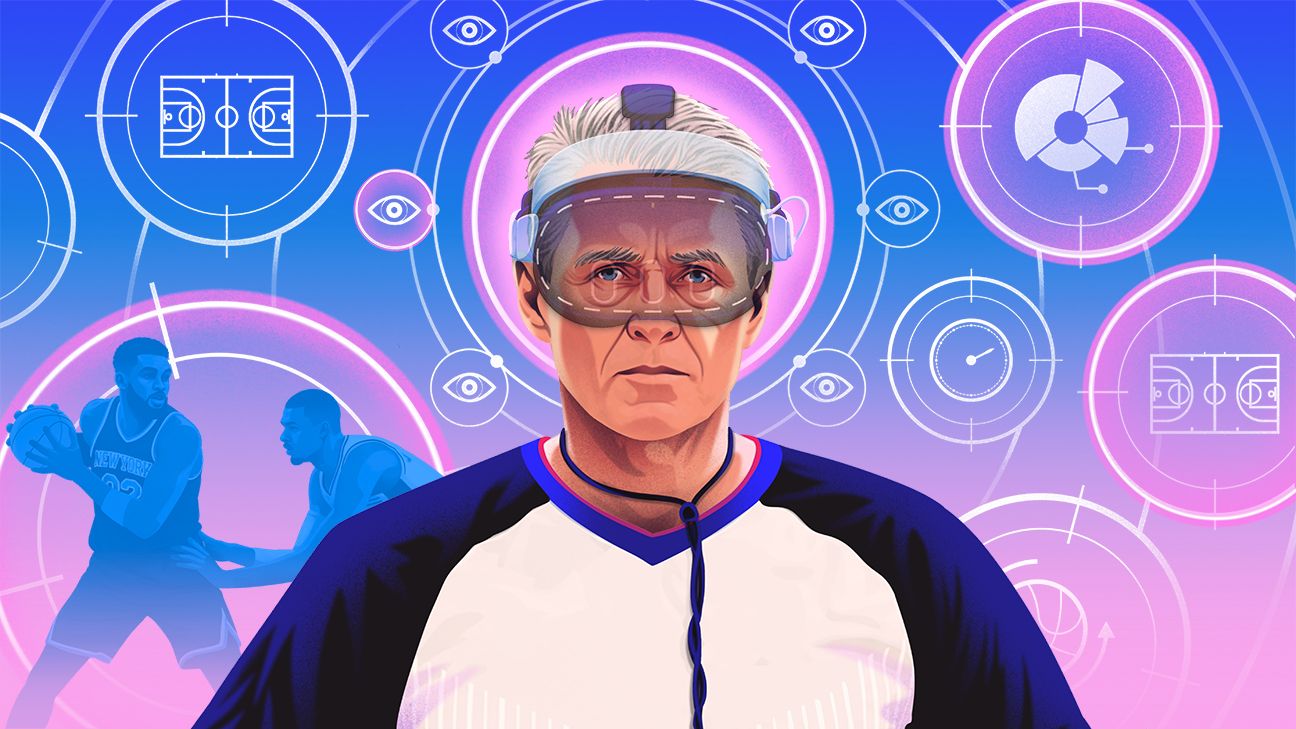
Eye tracking sports technology has moved from lab talk to locker-room routine, with ESPN reporting that NBA referee Scott Foster uses a Meta Quest 3 headset before games to sharpen focus, reactions and peripheral vision.
Before a June NBA Finals Game 5 between the New York Knicks and San Antonio Spurs, Foster’s routine included a virtual drill in which he tracked selected balls as they changed color and mixed with others. The exercise later added incoming objects and a boomerang-style decision test, according to ESPN.
Foster, a 32-season NBA official, told ESPN he keeps the headset with him on the road and repeats the opening stage until he completes it without a mistake. The full routine usually takes about 15 minutes.
The idea is called cognitive priming: a warmup for the eyes and brain before a fast, crowded game. Dr. Joe LaPlaca, founder of Ares Elite Sports Vision near Indianapolis, told ESPN he builds individualized programs for clients, including pregame and between-game sessions.
How does eye tracking help athletes and referees?
Eye-tracking and vision-training systems measure how quickly someone sees, chooses and reacts. In sports, that can mean tracking several players at once, spotting a puck through traffic or making a call while bodies are flying across the court.
Marc Davis, a 28-year NBA referee, told ESPN he uses cognitive priming before every game. Tyler Ford, an 11-year NBA official, began working with Ares in 2021 and was described by ESPN as the first NBA referee to do so. LaPlaca estimated that roughly 10 NBA officials now use the program.
The work is not limited to whistles. Cam Gray, goalie coach for the Indy Fuel and Chicago Steel, uses Ares-style VR drills with hockey goalies. In one exercise described by ESPN, virtual launchers send balls and bombs at the player, forcing quick choices about blocking, slowing or dodging.
Ryan Ouellette, a Fuel goalie, told ESPN that LaPlaca found a minor astigmatism he had not known about and recommended contacts. Ouellette also said he cut about 100 milliseconds from one reaction-time average during a season using the system. ESPN noted his save percentage rose from .879 to .936 that season, while also stating that one case does not prove the program’s effectiveness.
Other teams are buying in. ESPN reported that the Chicago Steel built an Ares setup at their facility, and Chip Ganassi Racing offers the technology to IndyCar drivers and pit crew members at its human performance center.
Major League Volleyball player Lydia Martyn told ESPN the training helped her use peripheral vision as a middle blocker, allowing her to track more attacking options across the net.
What does this have to do with brain health?
The same eye data that interests coaches is also drawing medical attention. Mark Edwards, co-founder and CEO of ViewMind, told ESPN that medicine has vital signs for organs such as the heart and lungs, but lacks a comparable marker for the brain.
Companies including ViewMind and Tobii are studying eye movements such as fixations and saccades, which can offer clues about attention, processing and decision-making, according to ESPN. Tobii executive Amanda Bentley told ESPN that the length and number of fixations can help explain how people process information.
ESPN reported that ViewMind has developed eye-tracking tests tied to Alzheimer’s research, including tools meant to detect early signs linked to likely development of the disease. Foster told ESPN that his wife, Paula, was diagnosed with early-onset Alzheimer’s in 2023 at age 54, and that her illness helped draw him toward the connection between eyes and brain health.
In golf, Tobii worked with equipment maker PING on studies using eye-tracking glasses to evaluate putter design and gaze. ESPN reported that the work found a 23% average increase in quiet-eye duration and that 67% of golfers across multiple studies performed better with the gaze-optimized putter.
For now, the sports pitch is plain: train the eyes, speed up the brain, trust the read. The bigger medical promise is still being tested, but the same tiny eye movements are getting attention far beyond the scoreboard.
This story draws on original reporting from ESPN.com.