Fantasy managers warned on innings squeeze for young arms
CBS Sports' Scott White says 20 starters could face workload cuts as teams protect pitchers for September and October.
By Georgia Hale · Staff Writer
3 min read
The fantasy trade clock is ticking, and CBS Sports fantasy analyst Scott White has a warning for managers holding young starting pitchers: innings can disappear fast in August and September.
White identified 20 starters who may be at risk of reduced workloads as MLB clubs get deeper into the season. His list is based on how many innings each pitcher has thrown this year compared with recent seasons and career highs, with totals including minor league and postseason work through Wednesday, July 22.
White wrote that old-school hard innings caps are less common now, but teams can still pull the lever in softer ways. That can mean skipped turns, shorter outings or injured-list stays that help slow a pitcher down without announcing a shutdown.
With about 60 games left for each team, White estimated a regular starter could have about 60 innings remaining, assuming a five-man rotation and roughly five innings per outing. That math makes several arms look wobbly for fantasy stretch runs.
The highest-risk names
Milwaukee's Jacob Misiorowski is marked high risk despite having 115 innings this year after 141.1 last year. White pointed to his four-inning exit in his previous start and conflicting reports about arm fatigue, adding that the Brewers may want him fresher for the playoffs.
Cincinnati's Chase Burns is also high risk at 107.2 innings, close to his 111-inning high from last year. White noted Burns went on the injured list around that point last season and later returned as a reliever.
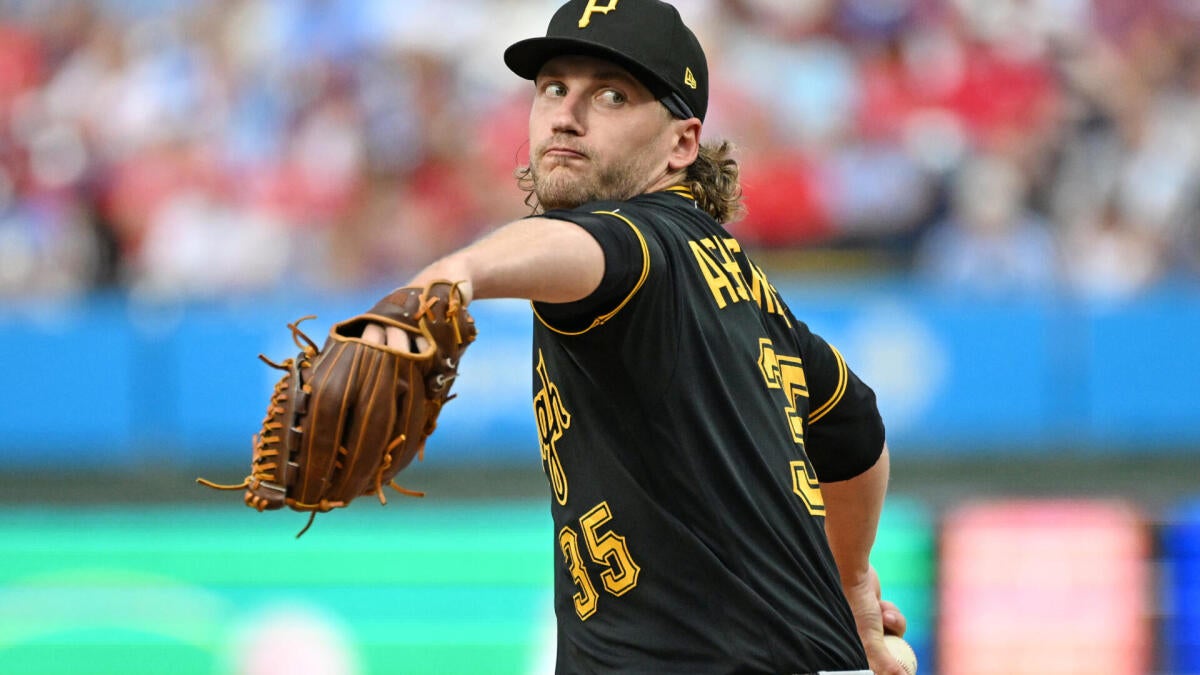
Pittsburgh's Braxton Ashcraft, at 116.1 innings after a 118-inning high, made the high-risk group as well. White said a recent rough stretch could point to slipping command, and he suggested a shutdown could become more plausible if the Pirates fall further from the playoff chase.
Other high-risk pitchers in White's analysis include Miami's Max Meyer, Boston's Payton Tolle, Dodgers righty Emmet Sheehan, Boston's Jake Bennett, Milwaukee's Shane Drohan, Dodgers starter Roki Sasaki, Mets righty Christian Scott and Baltimore's Brandon Young.
Medium risk, but still worth watching
White placed several starters in a middle tier, where team context may matter as much as the innings count.
- Kyle Harrison, Brewers: 83.2 innings this year, with a forearm injury possibly easing later workload pressure, according to White.
- Eury Perez, Marlins: 91.2 innings this year after 118 last year, with White noting he is two years removed from Tommy John surgery.
- Justin Wrobleski, Dodgers: 106.2 innings this year, with White citing the Dodgers' tendency to manage pitcher workloads closely.
- Reid Detmers, Angels: 120 innings this year after 63.2 last season, though White said last year's lower total came from relief work rather than extended absence.
- Joey Cantillo, Guardians: 106 innings this year, with shorter outings helping keep his total in check.
- Cade Cavalli, Nationals: 110.2 innings this year and a Tommy John surgery history, which White said could prompt extra caution.
- Griffin Jax, Rays: 81 innings after years in relief, with Tampa Bay already keeping him around five innings per start, according to White.
- Landen Roupp, Giants: 110 innings, matching his career high, though White noted his age and team context complicate the call.
- Ryan Weathers, Yankees: 102.1 innings this year after injury-hit seasons, with White suggesting a postseason bullpen role could be considered if the rotation gets crowded.
White also listed Cleveland's Parker Messick and Baltimore's Kyle Bradish under milder concern. Messick has thrown 117.2 innings after 138.1 last year, while Bradish has 107.1 after 54 last season and a career high of 178.1.
The fantasy takeaway from White's report is blunt: strong starting pitching can lose value before the playoffs if a club starts protecting arms. Managers shopping or buying before league deadlines may need to price in the chance that some of these pitchers are not full-volume options when matchups matter most.
This story draws on original reporting from CBS Sports.