NHL puts players through TV boot camp at league headquarters
Eight current and former NHL players spent two days in New York learning the on-air grind from ESPN, TNT and NHL Network personalities.
By Georgia Hale · Staff Writer
3 min read
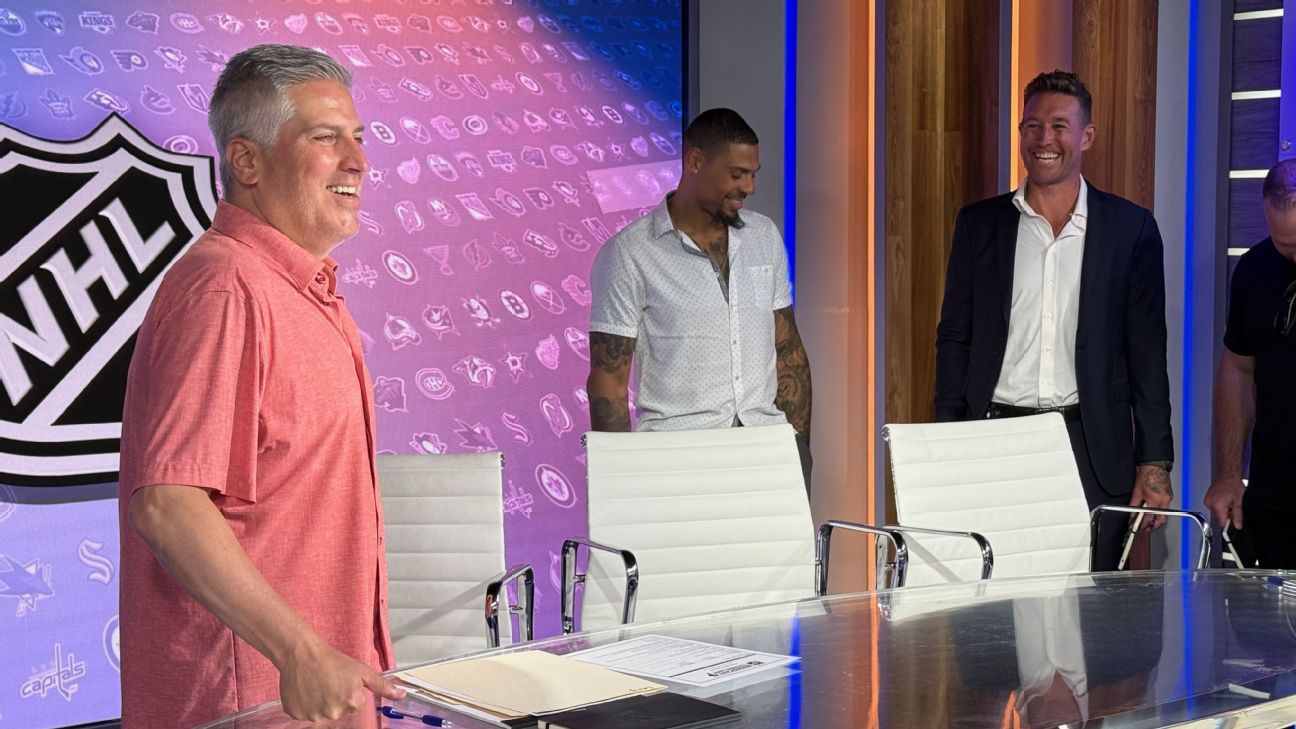
Cam Janssen has traded punches in NHL rinks, built a hockey podcast and worked on television in St. Louis. A mock pregame interview inside NHL headquarters still had him rattled.
According to ESPN’s Greg Wyshynski, Janssen was one of eight current and former players who took part in the NHL Broadcast Training Camp, a two-day program held in early July at the league’s offices in Manhattan. The point was simple: show players that talking hockey on TV is its own beast.
The camp put the group through simulated broadcasts, intermission discussions and interview drills. On-air talent from ESPN, TNT and NHL Network helped run the sessions, while executives spoke about topics including social media and how sharp opinions should be on television.
Janssen, a former NHL enforcer who played nine seasons, was paired with Ryan Reaves for an interview exercise. NBC Sports Philadelphia’s Ashlyn Sullivan played the part of Carolina Hurricanes coach Rod Brind’Amour, while NHL Network’s Lauren Gardner helped lead the module.
ESPN reported that Janssen said afterward that he had been shaking and sweating during the drill, and that he asked Sullivan whether the interview had worked. He also compared the experience to a rough shift in a game, saying a mistake can be followed by a better moment that gets everyone back onside.
The NHL has now run three of these camps. Steve Mayer, the league’s president of content and events, told ESPN that some players arrive with a natural feel for broadcasting, while others need more practice. He said the league likes that hockey players are used to being coached and can improve quickly over a couple of days.
The best-known graduate so far is former defenseman Erik Johnson, who attended in 2024 and now works for ESPN. The network has used him in several roles, including color commentary, rinkside reporting and sit-down interviews. ESPN noted that Johnson’s player connections helped him get former Colorado Avalanche teammate Nathan MacKinnon to talk about a viral Olympic moment involving a stuffed animal.
Noah Coslov, ESPN’s senior director for on-air talent recruitment and development, told the camp that players moving into media have to understand the workload and accept that the paycheck is different from an NHL salary. He said players also have to expand from focusing on their own team and preparation to following every club, every night, with fans watching.
Steve Levy, one of the ESPN personalities helping teach the group, framed the job as television built around hockey, not hockey itself. TNT Sports talent relations director Michele Zarzaca said TNT’s NHL coverage has to serve serious hockey fans while also keeping a lighter studio feel for a broader audience.
The two active players at the camp were New York Rangers defenseman Sean Durzi and Reaves, an unrestricted free agent forward who played for the San Jose Sharks last season. They were joined by former players Jack Johnson, Tyler Johnson, Pat Maroon, Ryan Malone, Janssen and goalie Dwayne Roloson.
Durzi told ESPN he admires what P.K. Subban and TNT’s Paul Bissonnette bring to hockey television, citing their mix of analysis, energy and entertainment. He said he believes that kind of blend is something he can do.
On the second day, the players split into pairs and rotated through five media modules. In one room, TNT’s Eddie Olczyk walked them through game preparation, analysis and using the telestrator, stressing honesty, credibility and having an opinion. The lesson for the players was blunt: the camera can hit harder than it looks.
This story draws on original reporting from ESPN.com.