Red Sox Curtis Mead trade gets a cool grade as Nationals land Early
ESPN graded Boston’s Curtis Mead deal a C while giving Washington an A- for adding left-hander Connelly Early.
By Georgia Hale · Staff Writer
3 min read
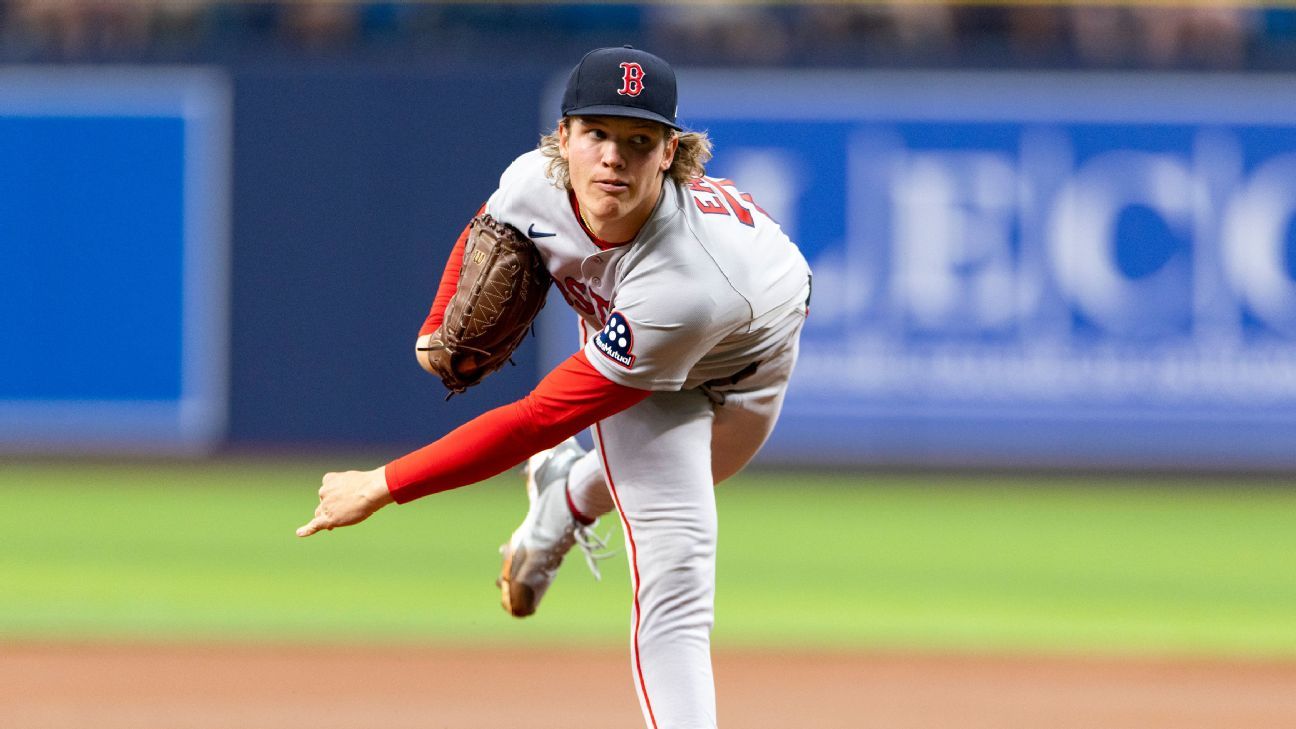
The Red Sox Curtis Mead trade gave Boston a right-handed bat for the stretch run, but ESPN’s first read was far warmer for Washington than for Boston.
In ESPN’s 2026 MLB trade deadline grades, Bradford Doolittle evaluated the swap that sent infielder Curtis Mead to the Red Sox and left-hander Connelly Early to the Nationals. Doolittle gave Boston a C and Washington an A-.
The deal is one of the early deadline moves ESPN singled out for grades and analysis as trade season picked up. The basic bet is clean: Boston is buying Mead’s 2026 offensive breakout, while Washington is taking a bigger-picture swing on a young pitcher with team control.
What did the Red Sox get in the Curtis Mead trade?
The Red Sox acquired Curtis Mead, an infielder whose bat has jumped this season with the Nationals. ESPN listed Mead at a 137 OPS+ with 2.0 bWAR in 2026, after he entered the year below replacement level.
Boston sent Connelly Early to Washington. ESPN described Early as a promising left-handed starter who was a consensus top 50-to-75 prospect entering the season and has made 34 big league starts.
Doolittle’s view of the Red Sox side was cautious. He wrote that the trade makes more sense through newer tracking data than through traditional trade valuation, because Mead’s underlying hitting markers look much stronger than his longer résumé.
According to ESPN’s analysis, Mead has made measurable changes at the plate. Doolittle cited improved strikeout and walk rates, a rise in isolated power, better swing decisions and an approach that has made him more of a flyball-heavy pull hitter.
That last piece matters at Fenway Park. ESPN noted that the Red Sox appear to be betting Mead’s current swing fits their home park, which has long rewarded right-handed hitters who pull the ball in the air.
The risk is just as plain. ESPN’s analysis said Mead does not offer much value with his glove or speed, making this a bet on the bat. Doolittle also noted that Mead had once been a top 50-to-75 prospect, but that was several years and multiple organizations earlier.
Why did ESPN like the Nationals’ side more?
Washington’s A- grade came down to turning Mead’s breakout into a controllable starting pitcher. ESPN reported that the Nationals had acquired Mead late in spring for a low-level prospect after he was designated for assignment by the White Sox.
From that angle, Doolittle framed Early as a strong return for a player whose production had become a pleasant surprise for Washington. ESPN also noted that the Nationals have enough offensive strength to absorb Mead’s departure.
Early is not presented as a sure thing. ESPN reported that he has been out for nearly a month with elbow inflammation, which forced him out of a June 30 start against the Nationals. Doolittle wrote that Early has resumed throwing and could return later in the season.
There are performance concerns, too. ESPN’s analysis said Early’s command has been uneven, leading to walks and hard contact, and that he has allowed 15 home runs this season. Doolittle wrote that his home run rate would rank among baseball’s 10 worst if he had enough innings to qualify.
Even with those flags, ESPN’s grade favored the Nationals because of Early’s prospect background, starter profile and remaining team control. For Boston, the grade reflected the cost of giving up that kind of arm for a hitter whose 2026 breakout still has to hold.
This story draws on original reporting from ESPN.com.