Spain’s World Cup crown comes with a FIFA-sized hangover
Spain beat Argentina to win the 2026 World Cup, while ESPN’s Sam Borden said the tournament mixed thrilling football with administrative controversy.
By Georgia Hale · Staff Writer
3 min read
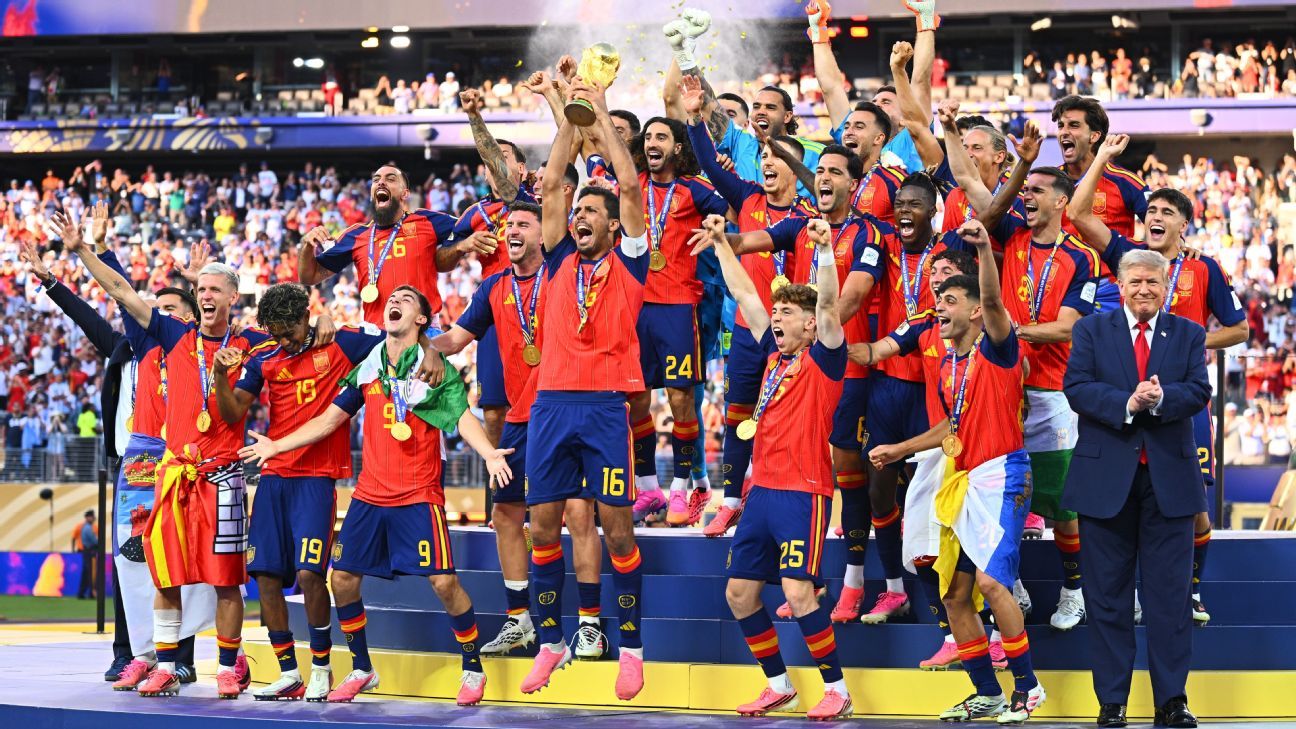
Spain closed the 2026 FIFA World Cup by beating Argentina 1-0 after extra time, according to ESPN’s match page, sealing a tournament that ESPN senior writer Sam Borden described as both a soccer showcase and an administrative headache.
ESPN reported that Spain’s win made the country the first to hold the men’s and women’s World Cup trophies at the same time. The final also marked a quiet exit for Lionel Messi’s Argentina, while Spain were presented by Borden as worthy champions after a month packed with elite performances.
Kylian Mbappé won the Golden Boot, finishing ahead of Messi and Jude Bellingham, according to ESPN. The same report said the world’s top four ranked teams reached the semifinals, while Erling Haaland helped turn Norway’s seafaring celebration into one of the tournament’s recurring images.
The expanded event delivered plenty beyond the favorites. ESPN noted that Canada won its first knockout match, Mexico also reached that milestone and then pushed England to the limit in a match Borden called a contender for the best of the tournament.
The United States also had its biggest men’s World Cup surge in years, according to ESPN. The team won three matches at a World Cup for the first time, scored a program-record 11 goals and topped its group after a key performance against Paraguay. Borden pointed to scenes in Seattle after the win over Australia, where fans and players sang “Country Roads,” as one of the defining images of the American run.
The party came with problems
For all the on-field buzz, Borden’s ESPN column argued that FIFA’s handling of the tournament left major stains. He cited ticket prices, political involvement, commercial breaks tied to hydration stoppages, and what he called a lack of transparency around VAR and disciplinary decisions.
One flashpoint was the case of U.S. striker Folarin Balogun. ESPN reported that President Donald Trump confirmed he asked FIFA to review Balogun’s red card, while Borden wrote that Trump and the U.S. government worked to help U.S. Soccer get the player cleared despite an automatic suspension.
Borden also criticized hydration breaks in indoor matches, saying the stoppages brought in-game advertising into a sport known for uninterrupted play. Fan access came under fire as well, with ESPN saying supporters’ groups were squeezed by dynamic pricing while FIFA collected commissions on secondary market sales.
The tournament format also drew scrutiny. ESPN pointed to the math created by sending eight third-place teams into the knockout rounds, along with some Matchday 3 results Borden described as convenient.
Geopolitics intruded too. ESPN said Iran, which was at war with one of the tournament’s host nations, faced uncertainty over when and how the team would travel for matches.
Still, the month produced the kind of scenes FIFA loves to sell: Scotland’s connection with Boston, Kansas embracing Algeria, Cristiano Ronaldo scoring in his farewell, Cape Verde and goalkeeper Vozinha becoming surprise tournament stories, and Argentina repeatedly finding late drama before the final.
Borden concluded that the money made by the tournament will help FIFA promote soccer in more places, while also encouraging more commercialization, including ads, halftime shows and the possibility of an even larger 64-team field. He also suggested FIFA and the United States could stage another tournament together, possibly as soon as 2034.
This story draws on original reporting from ESPN.com.