Stanford football union push begins with ACC player organizing plan
Stanford players have elected reps and a campus chapter as they explore collective bargaining with the ACC, CBS Sports reports.
By Georgia Hale · Staff Writer
4 min read
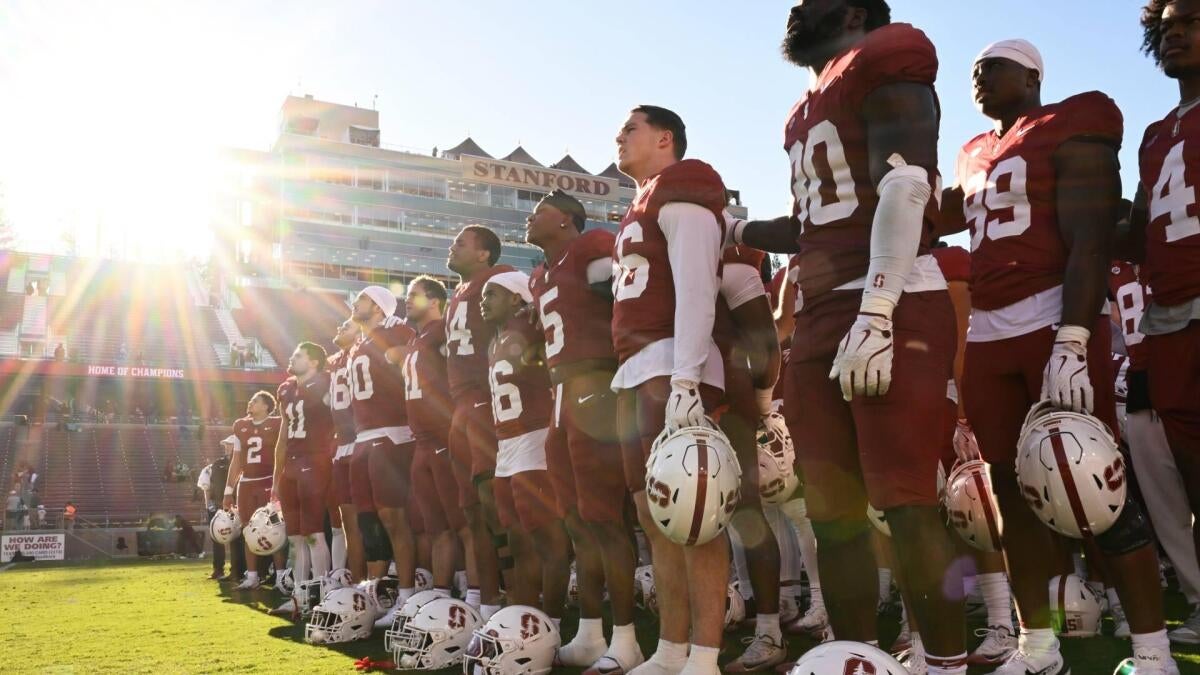
The Stanford football union push is no longer just locker-room chatter. Stanford players have set up a player-led fraternity chapter meant to educate teammates, with a long-range goal of collective bargaining with the ACC, according to CBS Sports.
Linebacker Ernest Cooper and offensive lineman Fisher Anderson are serving as elected player representatives at Stanford, CBS Sports reported. The broader idea is a conference-wide structure in which each football team has its own elected representatives.
No one involved expects a formal union to arrive while the current Stanford players are still in college football, according to the report. The work now is about building the machinery for a later fight over player power, employment status and bargaining rights.
Could Stanford football players form a union?
A union would be an organization players authorize to bargain on their behalf over issues such as pay, benefits and working conditions. A collective bargaining agreement is the deal that would set those terms between the players’ representative and the conference or other governing body.
Anderson told CBS Sports he would support being classified as an employee, citing the ability to form a union and pursue a collective bargaining agreement, as well as how players are treated on campus. Cooper also backed the idea, saying football operates like a year-round job and that players are already being paid for their work.
CBS Sports noted that athletes may not need to be full-time employees to organize, pointing to recent union activity among California gig workers. Industry sources told the outlet that bargaining by conference could be more workable than bargaining school by school, and that Big Ten athletes receiving revenue-sharing compensation get 1099 tax forms from the conference rather than from individual schools.
Who is helping the Stanford players?
Jason Stahl, founder of the College Football Players Association, has been working with Cooper and Anderson for more than a year, CBS Sports reported. A former Stanford team employee connected the players with Stahl, and the players took time to assess him before bringing him around the team.
Stahl met with Stanford players in late June and early July, with the school aware of the meetings, according to CBS Sports. Cooper and Anderson also met with Stanford general manager Andrew Luck, a former NFL Players Association member. Luck did not comment to CBS Sports, while the players described the meeting as friendly and neutral.
Stahl said the effort is still in its early stages and estimated formal unionization could happen by the end of the decade. He told CBS Sports that organizers would need, for example, more than 1,000 ACC football players and signed authorization to act as their collective bargaining representative.
The current Protect College Sports Act could stall if Congress does not vote before the August recess, CBS Sports reported, and the bill does not address athlete employment or collective bargaining. Athletes.org has also released a collective bargaining framework this year.
What happened in past college athlete union attempts?
The best-known college athlete union drive came at Northwestern in 2014. The National Labor Relations Board later declined to settle whether the players were employees, with CBS Sports reporting that the board said it lacked jurisdiction because Northwestern was private while most conference peers were public.
ACC commissioner Jim Phillips was Northwestern’s athletic director at the time. He did not comment to CBS Sports through a spokesperson, but in 2014 he said Northwestern believed its athletes were not employees and that collective bargaining was not the right route.
Dartmouth men’s basketball players voted 13-2 to unionize in 2024, CBS Sports reported, then withdrew their petition amid uncertainty tied to the newly Republican-led NLRB.
Inside the ACC, Boston College coach Bill O’Brien recently called for a collective bargaining agreement, and Syracuse Chancellor and President Kent Syverud told ESPN in December that athletes need a real collective voice in setting rules. Anderson told CBS Sports he believes the next generation of college athletes may be the ones to finish the work Stanford players are starting.
This story draws on original reporting from CBS Sports.