World Cup players loved the badge in ESPN’s 747-emote count
ESPN tracked every group-stage lineup gesture and found national pride, folded arms and fist pumps ruled the pregame screen.
By Georgia Hale · Staff Writer
3 min read
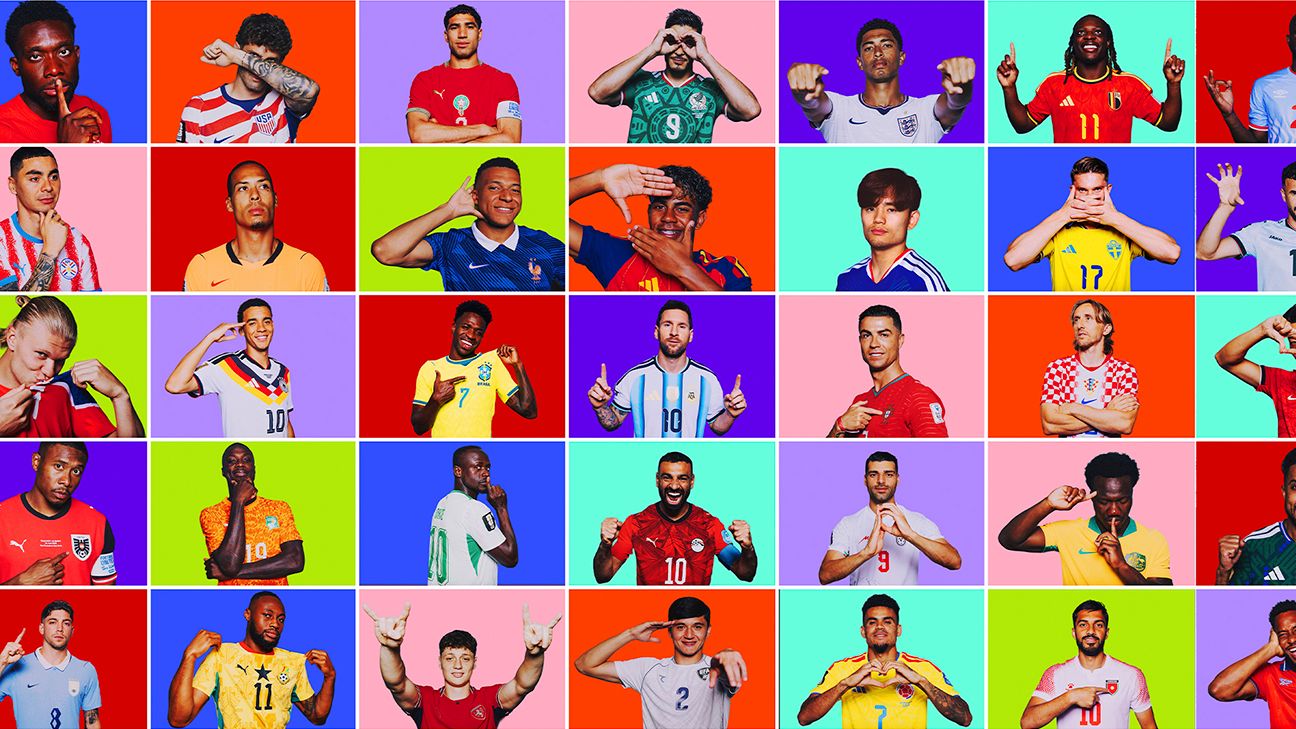
The tiny TV spotlight before kickoff turned into its own World Cup contest: ESPN counted 747 different player lineup gestures during the 2026 group stage, and the badge won by a mile.
James Tyler, an ESPN soccer editor, reported that the outlet reviewed every pregame lineup package from the 72 group matches, logging only unique players and their unique gestures. Because players kept the same move across multiple appearances, the count focused on starters who appeared for the first time in the data set.
The review covered 747 players and sorted their moves into 43 specific categories, with two extra labels for signature poses and combination routines. Similar badge-based moves, including touching, kissing, pointing to or grabbing the crest, were treated as one category.
The crest was king
According to ESPN’s count, 131 players, nearly 18% of those studied, used some form of badge gesture. Dr. Juveria Zaheer, an associate professor in the Department of Psychiatry at the University of Toronto, told ESPN that touching the badge may feel like a socially accepted way for players to show patriotism because so many others do it.
Folded arms came in second. ESPN reported that 10 of the 48 teams had no player use the pose, while several sides leaned hard into it. Iran had 12 players do it, Austria had 11, the United States had nine and Ghana had seven.
Zaheer told ESPN the folded-arms stance can project seriousness, especially for a player who wants to look ready to get on with the job. ESPN also noted that the pose can carry other meanings, including defensiveness, self-protection or a claim of importance.
Fist pumps, hand rubs and power poses
The two-handed fist pump ranked third in ESPN’s tally. The outlet counted 31 players who used one fist, while nearly 12% of the overall player pool went for the double-fist version. Norway, one of the tournament’s underdog stories in ESPN’s framing, had eight of its 21 group-stage players use the move. Sixteen teams had no player use it.
Hand rubbing landed fourth. ESPN found it was especially popular with two host nations: seven U.S. players and five Canadians used it. Group G, made up of New Zealand, Iran, Belgium and Egypt, had none, and 23 countries did not use the gesture at all.
Hands on hips rounded out the top five. Iraq was the standout there, with 11 of its 13 group-stage starters choosing the pose, according to ESPN.
Some players went their own way
ESPN’s analysis also picked out the rare one-offs. Belgium winger Jérémy Doku mimed removing a crown from his head. Netherlands defender Nathan Aké used what ESPN described as relaxed “cowabunga” hands. Egypt’s Emam Ashour performed a lion-growl style gesture.
Only one player in the 747-player group used prayer hands, according to ESPN: Egypt’s Mohamed Hany. The outlet noted that Hany has also been credited with two own goals in the tournament, against Belgium and Australia, which ESPN called a World Cup first.
Issa Laye was another solo act, spinning a ball on his finger during his screen time, ESPN reported.
Team style showed up too. ESPN said 15 of the 48 teams used double-digit gesture types, including combination moves. The Netherlands stood out for variety, with nearly every player doing something different, while Portugal also showed a spread of individual poses.
At the other end, ESPN reported that the U.S. was the most uniform: all 21 American players used one of four top-five gestures, with nine folding arms, seven rubbing hands, four putting hands on hips and one going to the badge.
This story draws on original reporting from ESPN.com.