AI deepfake quiz shows spotting fakes is now a coin toss
A Veriff quiz put CBS LA’s Kristine Lazar to the test, and her first score showed how hard AI images and videos have become to detect.
By Frankie Delgado · News Reporter
3 min read
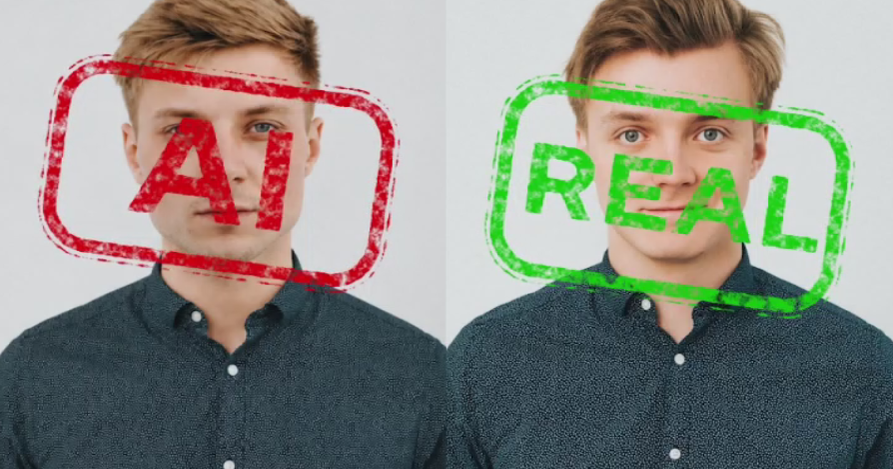
CBS LA consumer investigator Kristine Lazar went up against a dozen images and videos in an AI-spotting quiz and got only three right before getting expert help.
The test came from Veriff, an online identity verification company, which created a side-by-side quiz asking users to pick out real people and AI-generated deepfakes. Lazar, who said she has worked as a consumer investigator for nearly a decade, described her first attempt as an “F.”
Her score landed at three correct answers out of 12, or 33%. According to Veriff product director Raul Liive, that poor showing tracks with what the company has found in broader testing of Americans.
Liive told CBS News that people in the United States are performing close to a coin flip when asked to decide whether an image is real or fake. Asked if people are guessing, he said it is “kind of a guess” for ordinary viewers.
The old clues are fading
For years, many internet users looked for obvious AI tells: warped hands, missing fingers, odd eyes or faces that felt slightly off. Liive said those shortcuts are no longer reliable because AI image quality has improved sharply in recent years.
He said earlier AI fakes were easier to catch because fingers might be missing or eyes might look strange. Now, he told CBS News, the output has become good enough that visual inspection alone can fail.
Lazar’s own reactions showed the problem. After one answer was revealed, she said she had thought a real person in the quiz was the fake-looking one.
Liive advised viewers to slow down and study faces for smaller inconsistencies, including unusual texture shifts, odd patterns and subtle mismatches. In video, he said the job can be harder because motion can distract the eye.
Still, Veriff’s guidance pointed to possible video clues: limited blinking, movement that changes speed in strange ways, and clothing patterns that appear to merge unnaturally with the background.
A better score after expert tips
After Liive explained what to watch for, Lazar tried the quiz again. Her score rose from three correct answers to eight out of 12.
On the second attempt, she spotted smaller details she had missed the first time. In one image, she noticed earrings that did not match, saying one appeared larger than the other.
Even with training, Liive said perfect detection is not a sure thing. He told CBS News that even people who work with AI every day cannot get every item on the quiz right without extra help.
Lazar said the experience changed her takeaway about online images and video: “Seeing is no longer believing.”
Experts cited by CBS News recommend using AI-powered detection tools or dedicated verification apps when trying to confirm whether an image or video is authentic, rather than relying only on what appears on screen.
This story draws on original reporting from CBS News.