Water and power sites take hits as U.S.-Iran fighting widens
Desalination and energy facilities in Iran and Kuwait were damaged as the fight over the Strait of Hormuz escalated.
By Georgia Hale · Staff Writer
3 min read
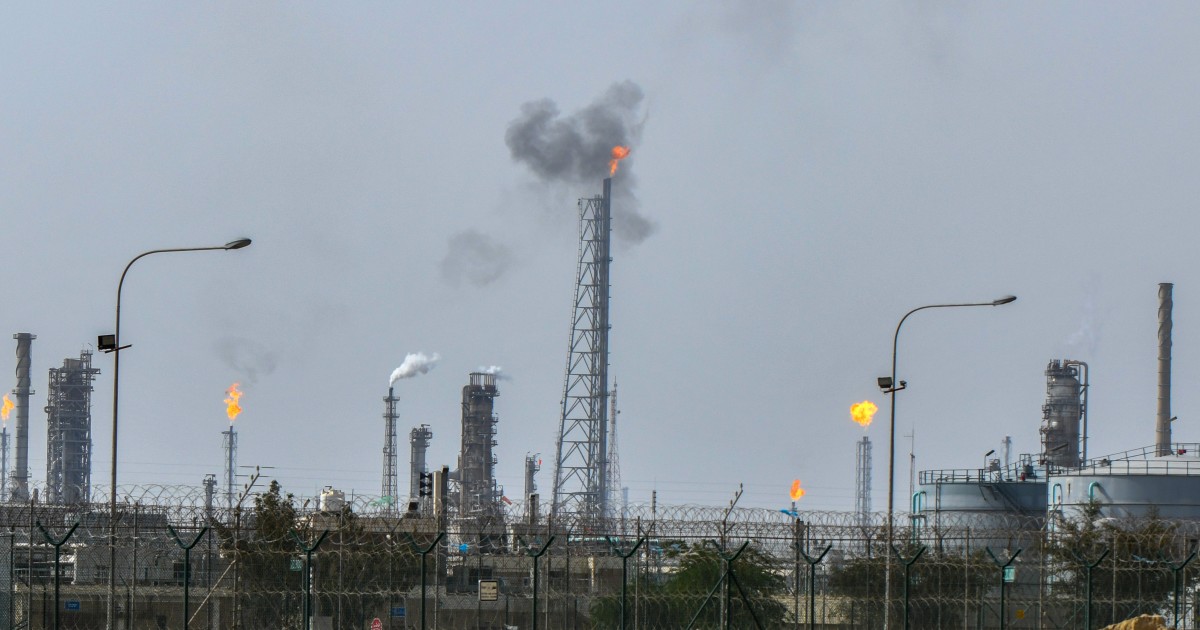
A U.S. strike on a desalination plant on Iran’s coast disrupted drinking water for about 10,000 people across 20 villages, Iran’s semi-official Tasnim news agency reported Saturday, citing the head of the local water company.
The plant is in Bonji village, on the Iranian coast. Iran’s Embassy in India said on X that drinking water supplies had been interrupted in several villages in western Jask County and described the strike as a war crime.
U.S. Central Command said late Friday that it had finished a seventh straight night of attacks on military infrastructure and “other assets.” It did not announce any strikes on civilian infrastructure.
Kuwait reports damage and injuries
Kuwaiti officials also reported new damage to energy and water facilities after Iranian attacks. The country’s energy ministry urged civilians Saturday to cut electricity use during peak demand after a strike on a power and desalination plant sparked a fire, the second such attack in two days.
Kuwait Petroleum Corporation said Saturday that Iran had targeted one of its vital sites, causing several injuries and “significant material losses.”
Brig. Gen. Saud Al-Otaibi, a spokesperson for Kuwait’s defense ministry, said oil and electricity facilities had suffered severe damage. Kuwait’s foreign ministry said Iran’s attacks on vital facilities showed what it called a systematic and aggressive approach toward civilian targets.
The strain is hitting during punishing summer conditions in Kuwait, where temperatures have topped 110 degrees in an arid climate.
Strait of Hormuz fight intensifies
The infrastructure strikes come after the collapse of an interim ceasefire between the U.S. and Iran. Since then, the two sides have exchanged deadly attacks on a daily basis.
The Strait of Hormuz remains at the center of the confrontation. Iran wants ships to use a route nearer its coast and pay a toll, while the U.S. has been urging a path closer to Oman, outside Iranian control.
Iran has declared the strait closed, and the U.S. has reimposed its naval blockade. Shipping traffic has again been brought close to a standstill after a brief pickup.
Recent U.S. attacks have also included strikes on bridges linking the southern port of Bandar Abbas with Tehran, as Washington tries to pressure Iran over control of the waterway.
Missiles intercepted across the region
Kuwait said Saturday that it had intercepted Iranian missiles and drones and temporarily closed its airspace. Kuwait Airways said it was rescheduling most commercial flights.
Bahrain’s defense forces said Iranian missiles were intercepted Saturday morning. Jordanian forces also intercepted Iranian attacks, which Iran’s Revolutionary Guards said were aimed at an American base in Jordan.
The Revolutionary Guards claimed at least two U.S. fighter jets were destroyed there, according to Tasnim. NBC News said it could not verify that claim.
President Donald Trump said in a national address Thursday that the war was going well, adding, “We are likewise winning big in Iran.” He said Americans would see the results “very, very shortly.”
Iranian officials said recent U.S. strikes on Iranian soil have killed at least 46 people and injured more than 400. Iran says the attacks have hit civilian infrastructure.
Iran’s energy ministry also called Friday for residents in southern provinces to conserve electricity, citing extreme heat, after acknowledging strikes on power infrastructure.
Iran has reported attacks on strategic Qeshm island and said Friday that Chabahar port, where India operates a terminal, had been hit and a control tower destroyed. India’s Ministry of External Affairs said it knew of the attack but that the terminal itself was not damaged.
This story draws on original reporting from NBC News.