GOP redistricting push largely backfires in House races
Democrats won or led in 12 of 15 GOP-redrawn districts, though some results and runoffs were still unresolved.
By Frankie Delgado · News Reporter
3 min read
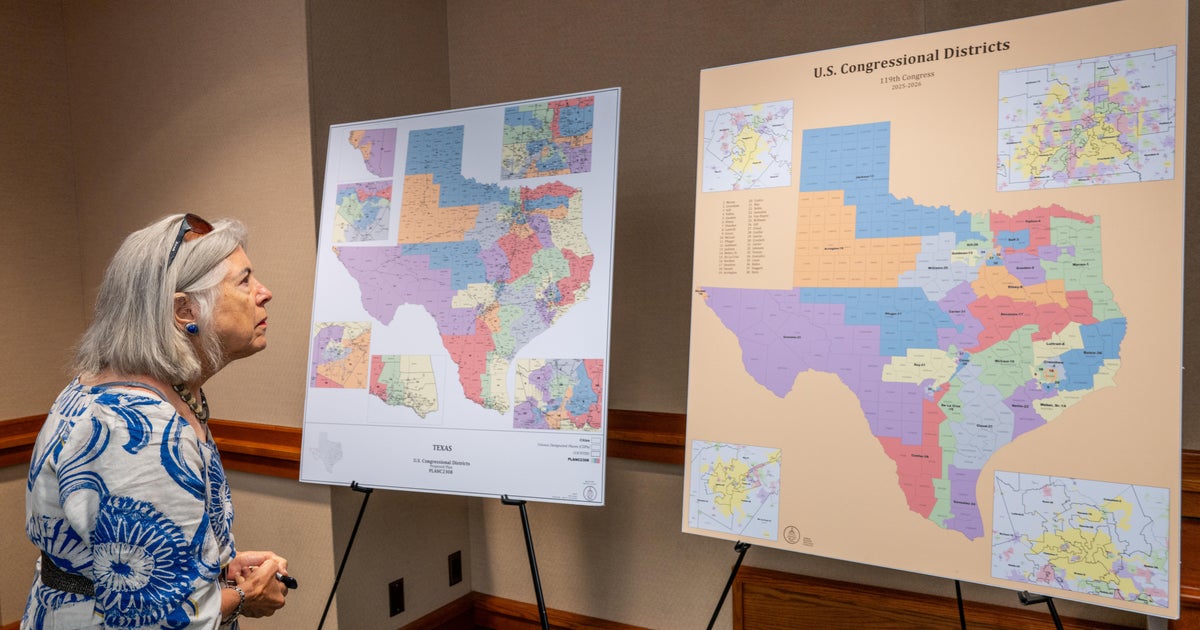
The GOP redistricting dummymander question has a pretty clear answer so far: Republicans’ mid-decade push to redraw House maps largely failed to produce the seats it was meant to deliver. Reuters reported on Nov. 5 that Democrats had won or were leading in 12 of 15 districts that Republicans redrew to be more conservative.
That does not settle every race, and it does not prove every new map cost Republicans a seat. But the results gave the political term “dummymander” fresh life after an unusually aggressive round of mapmaking ahead of the 2026 midterms.
Did GOP redistricting create a dummymander?
A dummymander is a gerrymander that backfires, leaving the party that drew the lines worse off. A map that fails to create its hoped-for pickups is not necessarily a dummymander by that narrower definition. The label fits most clearly where redrawn boundaries appear to have put a party’s own incumbents in danger or helped opponents gain seats.
Republicans began the effort after President Donald Trump urged Texas lawmakers in 2025 to adopt a mid-decade congressional map intended to flip five Democratic seats, according to Reuters. Redistricting usually follows the once-a-decade census, making the multi-state effort unusual.
Texas was supposed to be the prize. But Democrats won four of the five House seats Republicans had shifted toward the GOP, NPR reported, citing Associated Press race calls. CBS News reported the Texas delegation instead moved from 24 Republicans and 13 Democrats, plus one GOP-leaning vacancy, to 24 Republicans and 14 Democrats.
Florida also failed to deliver the expected GOP gains. CBS News reported that Democrats won all four districts Florida Republicans had targeted, while each party kept the same number of House seats statewide. NPR separately reported Democratic wins in redrawn districts held by Kathy Castor, Pia Dandiya and Jared Moskowitz.
Where might new maps have hurt Republicans?
The sharper version of the dummymander argument was emerging in North Carolina and Tennessee, where some races were still unsettled. Reuters reported that Republican mapmakers may have weakened their own incumbents by spreading reliably Republican voters too thinly.
In North Carolina, Democratic Rep. Don Davis won reelection despite a redraw aimed at defeating him, Reuters reported. Republican Rep. Greg Murphy, whose district absorbed Democratic voters removed from Davis’ seat, was narrowly ahead while ballots were still being counted. An election analyst told Reuters that a Murphy loss would be a classic dummymander.
In Tennessee, one newly drawn district involving Memphis remained too close to call, Reuters reported. A Republican-held district near Nashville, after losing conservative territory in the redraw, appeared likely to go Democratic.
Alabama offered another failed target: Democratic Rep. Shomari Figures won reelection after Republicans drew a new map aimed at unseating him, according to Reuters. CBS News likewise reported that both Democratic incumbents in Alabama’s two majority-Black districts held their seats.
The maps were not the only force at work. Reuters said the GOP redraws did not account for a broader shift away from Trump’s 2024 performance. NPR reported that Texas Republicans had expected gains among Latino voters to carry over, but many of those voters moved toward Democrats in 2026.
Democrats also redrew lines in response. Reuters reported that Democrats appeared likely to win all five Republican-held California seats targeted by a Democratic map, while a court-ordered redraw in Utah produced another Democratic pickup. With some counts and Louisiana runoffs unresolved, the final map-by-map balance was still not complete.
This story draws on original reporting from CBS News.