NTSB says Tesla driver overrode Full Self-Driving before fatal Texas crash
A preliminary report says the Model 3 was going over 70 mph when it struck Martha Avila’s home on a 30 mph residential street.
By Deshawn Carter · Sports Writer
3 min read
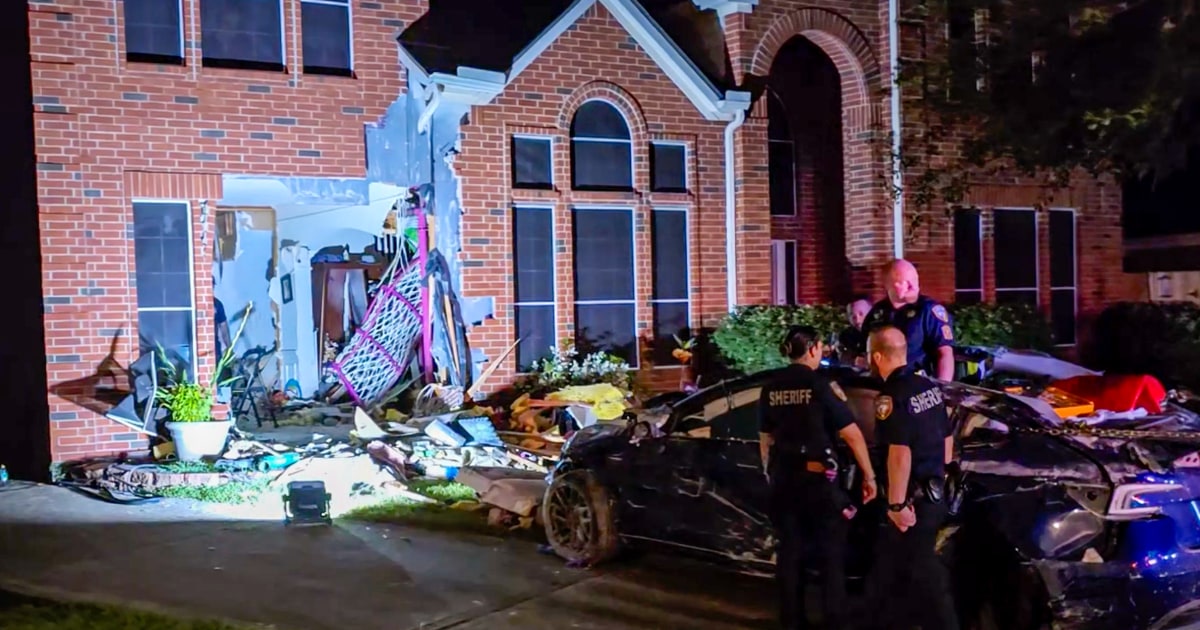
A Tesla Model 3 that crashed into a Texas house and killed 76-year-old Martha Avila had been placed in Full Self-Driving mode, but the driver manually overrode the system by flooring the accelerator before impact, the National Transportation Safety Board said in a report released Wednesday.
The driver, 44-year-old Michael Butler, was behind the wheel during the June 19 crash on Rose Hollow Lane, according to the NTSB. The agency said the car was traveling faster than 70 mph when it hit the residence. The posted speed limit on the residential road is 30 mph.
According to the NTSB report, the Tesla was on the residential street when it partly went into a driveway and struck the home. Avila, who was inside, was killed. Butler had minor injuries, the agency said.
The report said Butler had engaged Tesla’s Advanced Driver Assistance System, Full Self-Driving (Supervised), at the time. Data recovered from the vehicle showed that before the crash, the accelerator pedal was pressed to 100%, overriding the driver assistance system, according to the NTSB.
Driver charged as crash probes continue
Butler has been charged with manslaughter in connection with Avila’s death. Prosecutors and investigators have not said whether the vehicle itself played any role in the crash.
An attorney for Butler did not immediately respond to a request for comment on the NTSB findings. Tesla and CEO Elon Musk also did not immediately respond to an emailed request for comment Thursday.
The NTSB said conditions at the time were clear: daylight, dry pavement and no reported weather issue on the road.
The crash is still under investigation as the NTSB works to determine probable cause. The National Highway Traffic Safety Administration has also opened a special crash investigation.
What Butler told police
According to an arrest affidavit, Butler told police he was not feeling sick before the crash and did not have alcohol or drugs in his system.
The affidavit said Butler told police he had been making a DoorDash delivery, changed music on the Tesla’s touchscreen and later “passed out.” No additional information was available about his condition at the time of the crash.
Ashok Elluswamy, Tesla’s vice president of AI software, made a similar point about the accelerator days after the crash. In a June 22 post on X, he wrote that the driver had manually overridden self-driving by pressing the accelerator pedal all the way down in the residential area.
Experts urge a wider look
Philip Koopman, a Carnegie Mellon University professor emeritus who has worked on self-driving safety for 30 years, told NBC News the NTSB data may not answer every question.
Koopman said investigators should also consider whether a computer or electronics issue could have produced a false accelerator reading. He said any unintended-acceleration investigation should examine driver error, mechanical failure, electronics failure and software failure.
He said a 100% pedal reading could come from a driver’s foot, an object, pedal hardware, wiring, computer hardware, software, or some combination of issues. Koopman said he hopes the final NTSB report makes clear which possibilities could not be ruled out if not enough information is available.
Brett Schreiber, who represented families of two victims in another Tesla crash, told NBC News that the driver behavior described by the NTSB is unusual for a low-speed residential street. He said Tesla has faced years of allegations from drivers who said their cars accelerated without warning and were then blamed by recorded vehicle data.
Bryan Reimer, an MIT researcher and adviser on mobility and AI, told NBC News that as automation takes on more driving tasks, driver attention and understanding become more important. He said names such as Full Self-Driving can suggest more capability than the system provides, making clearer naming part of driver responsibility.
This story draws on original reporting from NBC News.