Goldman and JPMorgan cash in as AI money floods Wall Street
Record quarterly revenue at Goldman Sachs and JPMorgan Chase showed how the AI buildout is feeding trading, deals and financing across big banks.
By Frankie Delgado · News Reporter
3 min read
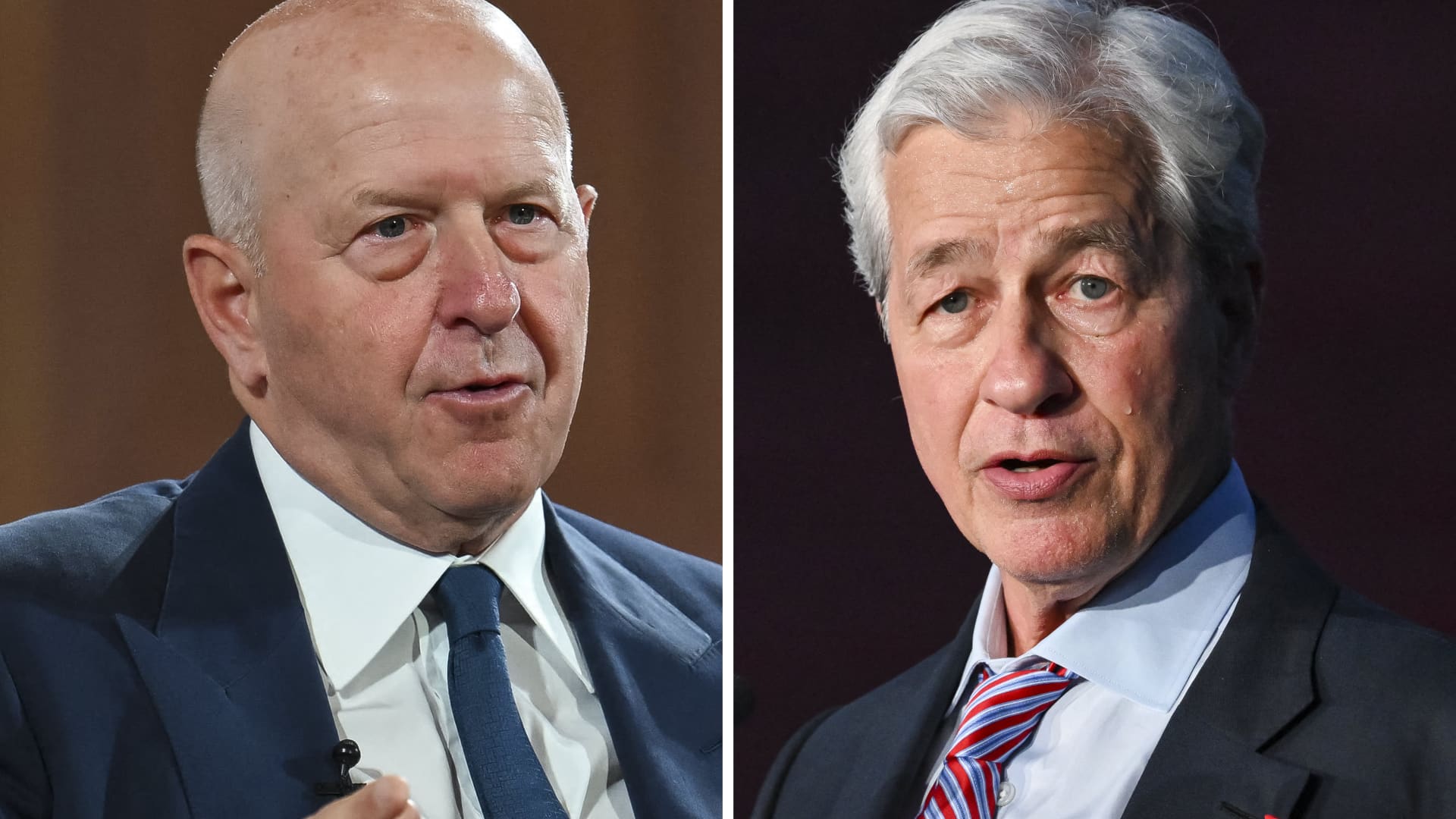
Goldman Sachs and JPMorgan Chase just showed Wall Street has its own AI trade, and it is not selling chips.
The two banking giants reported record quarterly revenue Tuesday, helped by sharp gains in equities trading and investment banking as artificial intelligence spending pushed money through markets worldwide, according to CNBC and company results.
Goldman’s revenue rose 39% to $20.3 billion, according to the bank’s quarterly release. JPMorgan’s revenue climbed 27% to $58 billion, the bank reported.
JPMorgan Chief Financial Officer Jeremy Barnum told reporters that AI is showing up across financial markets. He pointed to IPOs, index rebalancing and activity in Asia as part of the surge, saying much of it was tied to the AI theme globally, according to CNBC.
The results widen the AI winner board beyond Nvidia, Alphabet and other tech names that have dominated investor attention. Banks are collecting fees by advising on deals, arranging debt and equity offerings, financing data centers and power infrastructure, and handling the trading rush around companies linked to AI demand.
Goldman sees a long spending cycle
Goldman CEO David Solomon told analysts that AI investment is creating a broader effect across the U.S. economy, giving banks more chances to provide financing and trading services in both public and private markets, according to CNBC.
Goldman CFO Denis Coleman described the moment as an “AI capex super cycle,” telling analysts there is demand for financing across regions, industries and types of financial products. Capital expenditures refer to business spending on physical assets, such as factories or infrastructure.
Solomon said Goldman is getting ready for a three-to-five-year investment cycle that remains in its early stages, according to CNBC.
Investors liked what they heard. Goldman shares were up 8% in afternoon trading Tuesday, while JPMorgan rose 2%, CNBC reported.
Trading desks get a jolt
The strongest signs of AI’s impact showed up in equities trading. JPMorgan’s equities trading revenue rose 86% to $6 billion, while Goldman’s increased 72% to $7.42 billion, according to CNBC. Together, those results beat analyst expectations by $4.4 billion.
Bank of America also got a lift. Its equities trading revenue rose 70% to $3.6 billion, CNBC reported.
Soofian Zuberi, president and co-head of global markets at Bank of America, told CNBC that investors broadened their search for AI-linked gains into Asian markets, including South Korea, Taiwan and Japan. He said U.S. clients, including foundations, endowments and family offices, were putting more money into Asia as they looked for AI exposure outside the United States.
Wells Fargo banking analyst Mike Mayo said the AI investment surge reached a “tipping point” in the second quarter, according to CNBC. Mayo named Goldman, JPMorgan and Morgan Stanley as the biggest Wall Street beneficiaries of the shift and raised his price targets for Goldman and JPMorgan after their results. Morgan Stanley was due to report earnings Wednesday.
Deals and fees ride the wave
Investment banking also roared back. Goldman’s investment banking revenue increased 55% to $3.4 billion, while JPMorgan’s rose 30% to $3.3 billion, CNBC reported. Combined, the banks came in $1 billion ahead of analyst expectations.
CNBC reported that Goldman served as lead adviser on the SpaceX IPO and Alphabet’s $90 billion equity issuance, and advised Dominion Energy on its sale to NextEra Energy, with those transactions tied to the AI cycle.
Bank of America’s investment banking fees rose 50% to $2.1 billion, according to CNBC.
Zuberi told CNBC that banks are also starting to benefit from using AI inside their own operations. He said AI is helping banking speed processes, while banking is helping AI by financing the data centers needed for the technology.
This story draws on original reporting from CNBC.